

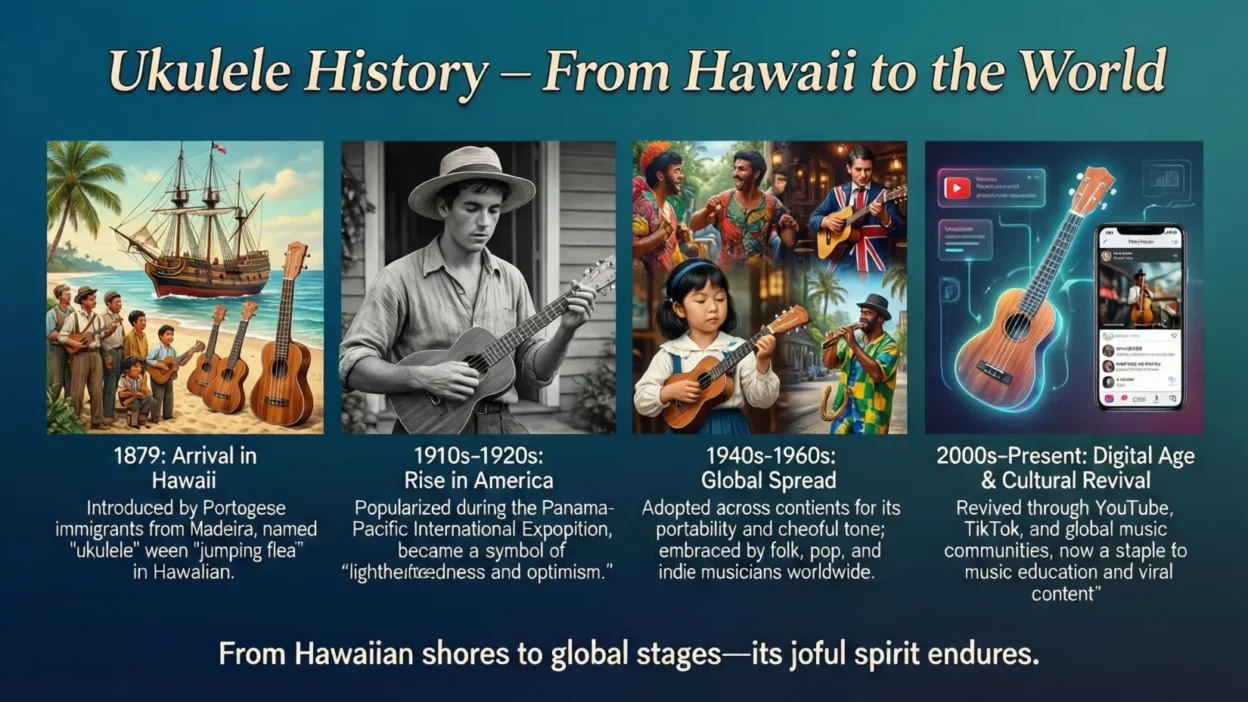
The ukulele is more than just a small string instrument; it is a cultural icon that has charmed generations with its cheerful sound. Originating in the 19th century, the ukulele was introduced to Hawaii by Portuguese immigrants, quickly becoming a central part of Hawaiian music and traditions. Its unique blend of simplicity, portability, and versatility made it popular not only in Hawaii but eventually around the globe. From the gentle strums accompanying hula dances to the modern hits of pop and indie artists, the ukulele has proven to be timeless.
Today, it is celebrated for its role in both traditional and contemporary music, inspiring musicians of all ages. In this article, we will explore the history of the ukulele, its evolution, types, cultural significance, famous players, and its ongoing impact on music worldwide. Whether you are a beginner or a music enthusiast, this journey through ukulele history is sure to delight.
Origins of the Ukulele
The ukulele traces its roots back to Portugal, where small stringed instruments like the machete, cavaquinho, and braguinha were commonly played. In the late 19th century, Portuguese immigrants brought these instruments to Hawaii, where they quickly captured the interest of local musicians. The Hawaiians adapted the instrument, creating a unique sound that perfectly complemented their traditional music and dances.
The word “ukulele” roughly translates to “jumping flea” in Hawaiian, likely inspired by the fast-moving fingers of players on the fretboard. Early Hawaiian musicians embraced the instrument, incorporating it into hula performances and family gatherings. Its small size, light weight, and cheerful tone made it ideal for both intimate settings and public celebrations.
During this period, the ukulele began evolving in design and technique. Hawaiian craftsmen experimented with materials and string arrangements, giving the instrument a distinctive voice different from its Portuguese ancestors. By the early 20th century, the ukulele had become an essential part of Hawaiian culture, loved by both commoners and royalty.
The Hawaiian adaptation of the ukulele laid the foundation for its global journey, eventually captivating audiences across the United States, Japan, Europe, and beyond. Understanding its origins is key to appreciating how this tiny instrument became a symbol of joy, culture, and musical innovation worldwide.
Early Popularity in Hawaii
After its introduction to Hawaii, the ukulele quickly became more than just a musical instrument—it became a cultural phenomenon. By the late 19th and early 20th centuries, the ukulele was widely embraced by Hawaiians of all ages and social classes. Its cheerful sound perfectly complemented hula performances, traditional songs, and festive gatherings, making it an essential part of Hawaiian life.
Hawaiian royalty, including King Kalākaua, were strong advocates for the ukulele, often featuring it in court performances and public events. This royal endorsement helped elevate the instrument’s status, encouraging its adoption across the islands. Local musicians began experimenting with new playing techniques, strumming patterns, and chord arrangements, giving the ukulele a distinct Hawaiian voice that set it apart from its Portuguese ancestors.
Community ukulele playing also became popular, with families and neighbors gathering to share music at celebrations and social events. This early popularity laid the groundwork for the ukulele’s future global appeal, as tourists visiting Hawaii would often encounter the instrument and take home recordings, performances, or even the instruments themselves.
Evolution of the Ukulele
Over time, the ukulele evolved from a simple folk instrument into a versatile and globally recognized musical tool. Hawaiian craftsmen began experimenting with different wood types, string materials, and body shapes, which gave rise to a variety of tones and styles. This evolution led to the creation of the four main types of ukuleles:
- Soprano: The smallest and most traditional size, known for its bright, classic sound.
- Concert: Slightly larger, offering more volume and a fuller tone.
- Tenor: Popular with professional musicians for its richer sound and extended range.
- Baritone: The largest standard size, producing deeper, guitar-like tones.
The ukulele’s construction also advanced. Traditional gut strings were replaced by nylon and fluorocarbon strings, making the instrument easier to play and maintain. Luthiers experimented with different body shapes, bracing patterns, and soundhole designs, resulting in enhanced resonance and projection.
Musically, the ukulele’s role expanded beyond Hawaiian folk music. By the early 20th century, it was being featured in vaudeville shows, jazz ensembles, and popular recordings in the United States. Players developed new strumming techniques, fingerpicking styles, and chord arrangements, which further broadened the instrument’s versatility.
The evolution of the ukulele illustrates how a simple instrument can adapt to changing musical trends while maintaining its distinctive charm and cultural roots, paving the way for its global popularity in the decades to come.
Ukulele in Early 20th Century
By the early 20th century, the ukulele had left Hawaii and begun its journey into mainstream American music. Its cheerful tone and portability made it perfect for the entertainment styles of the time, including vaudeville shows, Tin Pan Alley compositions, and radio performances. The instrument quickly became a favorite for both amateur and professional musicians.
Ukulele clubs and social groups began forming across the United States, allowing enthusiasts to gather, perform, and learn new techniques. Sheet music featuring ukulele arrangements became widely available, and the instrument’s presence in popular songs helped solidify its role in American culture. Its integration into jazz, ragtime, and novelty songs showcased its versatility and contributed to its nationwide popularity.
Hollywood also played a major role in promoting the ukulele. Early films featuring Hawaiian themes often included ukulele music, captivating audiences and inspiring a fascination with Hawaiian culture. This period marked the beginning of the ukulele’s transition from a regional instrument to a global phenomenon.
The early 20th century demonstrates how the ukulele, once a small island instrument, adapted to urban and international audiences, setting the stage for its worldwide recognition and enduring appeal.
Global Spread of the Ukulele
Following its rise in popularity in the United States, the ukulele began to capture the interest of musicians and audiences worldwide. In the early to mid-20th century, the instrument reached countries like Japan, Europe, and Australia, where it became a staple in both traditional and modern music scenes.
Tourists visiting Hawaii also played a key role in spreading the ukulele internationally. They often returned home with instruments, recordings, and sheet music, helping introduce the cheerful Hawaiian sound to new audiences. Ukulele festivals, competitions, and music clubs soon started appearing globally, fostering a growing community of enthusiasts.
The instrument’s small size, affordability, and ease of learning made it particularly appealing. It became popular not only for professional musicians but also for school programs, social clubs, and home entertainment, creating a universal appeal across cultures.
Today, the ukulele is celebrated worldwide, from street performers in Europe to pop stars in Asia. Its global spread illustrates how a simple island instrument can transcend cultural boundaries, connecting people through its joyful sound and accessible playability.
Ukulele in Popular Music
The ukulele’s cheerful sound and versatility have made it a favorite in popular music for over a century. In the early 20th century, the instrument featured prominently in Tin Pan Alley songs, vaudeville acts, and jazz ensembles, bringing Hawaiian-inspired melodies to American audiences.
One of the most iconic figures in ukulele history is Tiny Tim, whose 1968 hit “Tiptoe Through the Tulips” showcased the instrument’s whimsical charm. Decades later, Israel Kamakawiwo’ole brought the ukulele to international fame with his soulful rendition of “Somewhere Over the Rainbow,” blending Hawaiian tradition with modern pop.
Today, the ukulele continues to thrive in genres ranging from folk and indie to pop and experimental music. Social media platforms like YouTube and TikTok have further popularized the instrument, inspiring a new generation of musicians to learn and share ukulele covers, tutorials, and original compositions.
The ukulele’s presence in popular music demonstrates its timeless appeal, proving that this small, simple instrument can evoke emotion, creativity, and joy across generations and cultures.
Construction and Materials
The ukulele’s design and materials play a crucial role in shaping its distinctive sound. Traditionally, ukuleles were crafted from koa wood, a native Hawaiian timber known for its warm tone and beautiful grain. Over time, other woods like mahogany, spruce, and maple became popular, offering a range of sounds and price points for musicians.
String materials have also evolved. Early ukuleles used gut strings, which produced a soft, mellow tone but were prone to wear. Modern instruments typically use nylon or fluorocarbon strings, providing durability, consistent sound, and easier playability. Some advanced models feature electric pickups, allowing amplification for stage performances.
The ukulele comes in several sizes, each affecting tone and playability: soprano, concert, tenor, and baritone. Luthiers carefully craft the body shape, bracing patterns, and soundhole design to maximize resonance and projection. Even subtle changes in construction can significantly influence the instrument’s voice, giving each ukulele its unique character.
Understanding the construction and materials of the ukulele helps players choose the right instrument and appreciate the craftsmanship behind this beloved musical icon.
Cultural Significance
The ukulele is more than a musical instrument—it is a symbol of Hawaiian heritage and culture. Since its arrival in the islands, it has played a central role in Hula performances, traditional ceremonies, and community gatherings, reflecting the joyful spirit of Hawaiian music.
Beyond Hawaii, the ukulele has become a global cultural icon. Its cheerful tone and accessibility have made it a favorite for schools, music therapy programs, and community music projects around the world. The instrument also frequently appears in films, cartoons, advertisements, and social media, further embedding it into popular culture.
Famous players, such as Israel Kamakawiwo’ole and Jake Shimabukuro, have used the ukulele to showcase Hawaiian pride while inspiring international audiences. Its presence in music, media, and education demonstrates that the ukulele is not just an instrument—it is a bridge between cultures, connecting people through its lighthearted sound and universal appeal.
The ukulele’s cultural significance highlights how a simple, portable instrument can carry history, tradition, and joy, making it cherished across generations and continents.
Learning the Ukulele
One of the reasons the ukulele has gained worldwide popularity is its accessibility for beginners. Unlike larger string instruments, the ukulele is small, lightweight, and easy to hold, making it perfect for children, students, and casual musicians. Its simple chord structures allow beginners to play songs quickly, creating a sense of accomplishment that encourages continued practice.
Learning the ukulele also offers numerous benefits. It improves hand-eye coordination, enhances rhythm and timing, and can even boost mood and reduce stress. Many schools and community programs have adopted the ukulele for music education, introducing children to music theory and performance in a fun and engaging way.
Online tutorials, instructional books, and social media channels have made learning the ukulele easier than ever. From easy beginner songs to advanced fingerpicking techniques, players of all skill levels can find resources tailored to their needs.
Whether you are starting as a hobbyist or pursuing professional music, the ukulele offers an enjoyable and rewarding learning experience, making it one of the most accessible instruments in the world.
Ukulele Fun Facts and Trivia
The ukulele is full of interesting tidbits that make it even more charming and beloved worldwide. For starters, the word “ukulele” literally means “jumping flea” in Hawaiian, likely inspired by the quick movement of fingers on the fretboard.
Some fun facts include:
- The largest playable ukulele in the world measures over 21 feet long!
- Ukuleles have been featured in films, cartoons, and commercials, spreading their cheerful sound far beyond music.
- Famous celebrities, such as George Harrison, Taylor Swift, and Eddie Vedder, have played the ukulele, showcasing its versatility across genres.
- The instrument is often used in music therapy, helping reduce stress and promote emotional well-being.
- Social media platforms like YouTube and TikTok have sparked a new wave of ukulele enthusiasts, from beginners to professional performers.
Trivia like this highlights the ukulele’s unique charm, accessibility, and global influence, showing why it remains a favorite for both casual musicians and professional artists alike.
The Future of the Ukulele
The ukulele continues to evolve, blending tradition with modern innovation. Today, electric ukuleles, hybrid models, and custom designs are expanding the instrument’s possibilities, allowing musicians to explore new sounds and performance styles.
In contemporary music, the ukulele is appearing in genres once thought unconventional for the instrument, including rock, electronic, and experimental music. Its portability and cheerful tone make it ideal for street performances, social media content, and virtual concerts, ensuring that it remains relevant in the digital age.
Educational programs are also promoting the ukulele’s role in schools, therapy, and community projects, helping introduce new generations to music. As global interest grows, festivals, competitions, and online tutorials continue to connect players worldwide.
With its combination of cultural heritage, accessibility, and adaptability, the ukulele is poised to maintain its place as a beloved instrument. Its future looks bright, continuing to inspire joy, creativity, and connection for musicians and listeners alike.
Conclusion
The ukulele’s journey from Portugal to Hawaii and then to the world is a testament to its charm, versatility, and cultural significance. From its early adoption in Hawaiian music to its rise in American vaudeville and global popularity, the ukulele has captivated audiences across generations.
Its evolution in design, string materials, and playing techniques has allowed it to adapt to diverse musical genres, from traditional Hawaiian songs to contemporary pop, jazz, and experimental music. Beyond music, the ukulele has become a symbol of joy, community, and creativity, inspiring musicians, educators, and enthusiasts worldwide.
Whether you are a beginner learning your first chords, a seasoned musician exploring new sounds, or simply a lover of music, the ukulele offers a unique and timeless experience. Its cheerful sound and rich history ensure that it will continue to delight and connect people for generations to come.