Every gamer has been there — losing streak after losing streak, teammates throwing games, and frustration building up until you start making bad decisions. That’s when you’ve officially entered the Tilt Queue.
Tilt Queue meaning refers to continuing to play while emotionally frustrated, often leading to worse performance and more losses. It’s a psychological trap that many players fall into, especially in competitive games like League of Legends, Valorant, or Overwatch.
You’ll often see comments like:
- “I should’ve stopped playing an hour ago, I’m deep in the tilt queue.”
- “He’s not bad, he’s just tilted.”
Let’s explore what “tilt queue” really means, its origin in gaming psychology, and how you can avoid getting stuck in it.
What Does “Tilt Queue” Mean?
The term tilt queue combines two ideas:
- Tilt, meaning emotional frustration or loss of composure.
- Queue, referring to joining another game or match.
So, “tilt queue” means playing more games while tilted — instead of taking a break after a loss, you queue again, hoping to win and “redeem” yourself. Ironically, it usually makes things worse.
Example Sentences:
- “I went 0–10 last night because I tilt queued for hours.”
- “He’s in the tilt queue again — someone take his keyboard.”
Origin of the Term “Tilt” and “Tilt Queue”
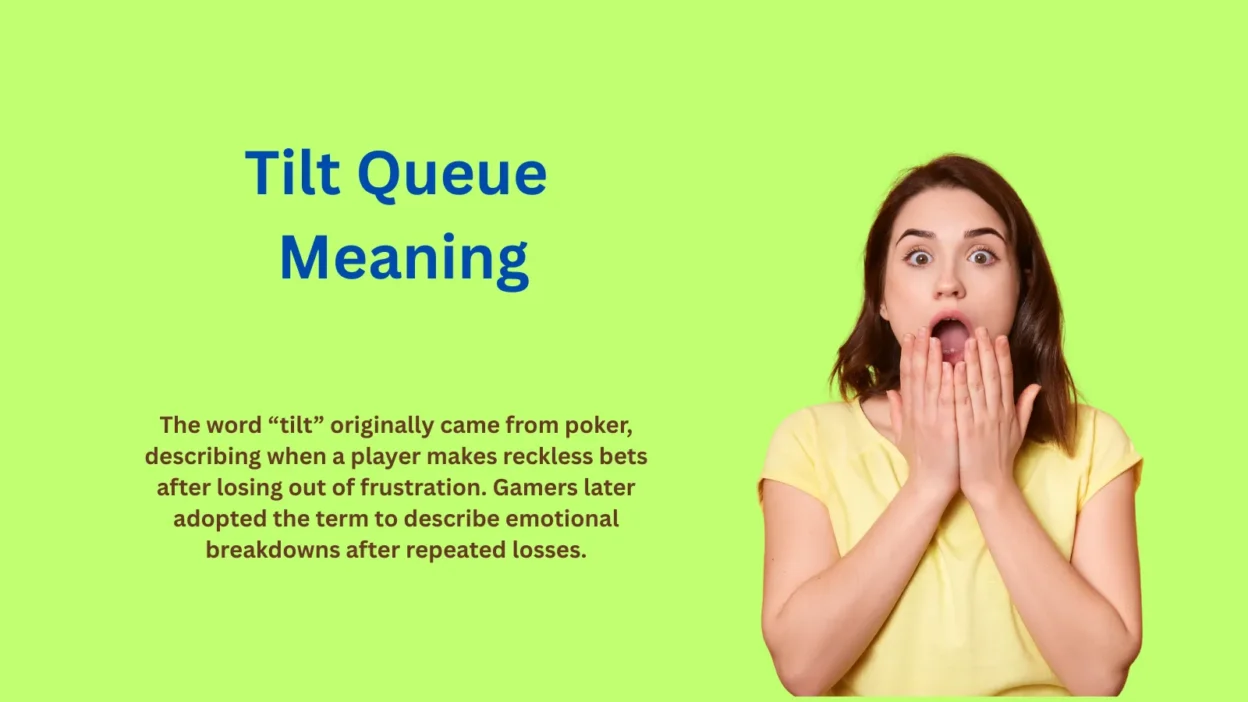
The word “tilt” originally came from poker, describing when a player makes reckless bets after losing out of frustration. Gamers later adopted the term to describe emotional breakdowns after repeated losses.
The phrase “tilt queue” emerged from MOBA and FPS communities in the early 2010s, especially on platforms like Reddit and Twitch. It became popular as players noticed that queueing while angry almost always led to more defeats.
Today, it’s a common part of gamer slang — and a reminder of how emotions can impact performance.
Why Players Enter the Tilt Queue
Gamers usually fall into the tilt queue because of emotional triggers that cloud judgment.
1. Revenge Mentality
After losing, players want to win back lost rank or points immediately. This “one more game” mindset leads to rushed decisions.
2. Ego and Denial
Admitting you’re tilted feels like losing again. So instead of stopping, you keep playing to “prove” you can win.
3. Overconfidence After Losses
Ironically, tilt often disguises itself as confidence — convincing you that the next match will fix everything.
4. Burnout and Fatigue
Playing for hours without breaks exhausts focus, turning small mistakes into big tilts.
Psychological Effects of Tilt Queue
Tilt queueing affects both mindset and gameplay.
- Reduced Reaction Time – frustration interferes with reflexes and decision-making.
- Tunnel Vision – players fixate on revenge or kills instead of strategy.
- Team Blame Loop – every mistake feels like someone else’s fault.
- Decreased Motivation – losses pile up, causing emotional burnout.
Ultimately, tilt queueing traps you in a negative feedback loop — more losses → more tilt → more queueing.
Examples of Tilt Queue in Gaming
League of Legends
After a bad match, a player jumps into another ranked game instead of taking a break — only to feed again.
Valorant / CS:GO
You lose multiple rounds due to teammates, get angry, and instantly re-queue — your aim worsens because your focus is gone.
Fortnite / Apex Legends
After dying early repeatedly, you rush into new lobbies out of frustration, taking unnecessary fights.
In all cases, tilt queueing hurts not only your gameplay but also your enjoyment.
Common Phrases Related to Tilt Queue
| Term | Meaning | Example |
|---|---|---|
| Tilted | Emotionally frustrated or playing badly due to anger | “He’s so tilted after that loss.” |
| Mental Boom | Completely losing focus or composure | “After that clutch loss, I mentally boomed.” |
| Queue Diff | When poor queue timing leads to worse teammates or matchups | “Bad luck, total queue diff today.” |
| Hard Reset | Taking a break to calm down and reset your mindset | “Time for a hard reset — no more tilt queue.” |
These terms often appear together in gaming chats, Twitch streams, and meme culture.
How to Avoid the Tilt Queue
Here are practical ways gamers manage or avoid tilt queue cycles:
1. Set a Stop-Loss Rule
If you lose two or three games in a row, take a break — walk, hydrate, or switch games.
2. Recognize Tilt Early
If you’re blaming teammates or feeling angry, that’s your cue to pause.
3. Play Normals, Not Ranked
If you can’t stop playing, switch to casual modes to release stress.
4. Use the “One Game Rule”
After a bad game, allow yourself one more — if that also goes poorly, stop completely.
5. Focus on Fun, Not Rank
Remember, the goal is improvement, not revenge.
Tilt Queue in Esports and Streaming
Even professional gamers experience tilt queue moments — the difference is how they manage them.
Top streamers often analyze mistakes live, then take breaks to reset their mentality. Esports teams hire sports psychologists to train players in emotional control, ensuring tilt doesn’t ruin competitive focus.
Some famous quotes from pros include:
- “Tilt is real, but so is discipline.”
- “Knowing when to stop is part of being good.”
These show that emotional awareness is a key skill in gaming performance.
Common Misconceptions
1. “Tilt Queue Means You’re Bad”
False. Even top players tilt — it’s a human emotional response. The key is how fast you recover.
2. “Only Ranked Players Tilt Queue”
No. Even casual gamers can fall into tilt queues, especially in intense matches.
3. “Tilt Queue Can Be Fixed with Luck”
Luck won’t fix mindset. Only awareness and breaks can.
Tilt Queue vs Hot Streak
| Aspect | Tilt Queue | Hot Streak |
|---|---|---|
| Emotion | Frustrated and impulsive | Confident and focused |
| Results | Consecutive losses | Consecutive wins |
| Cause | Emotional fatigue | Strategic momentum |
| Outcome | Burnout and regret | Motivation and consistency |
Understanding the difference helps players decide when to stop and when to keep going.
Internet Memes and Community Usage
On Reddit, Discord, and Twitch, tilt queue is often used humorously:
- “Bro’s on a 6-game tilt queue marathon 😭.”
- “My tilt queue arc ends tonight.”
Memes depict players surrounded by chaos, re-queuing despite exhaustion — a relatable gaming experience turned comedy.
Professional vs Casual Use
While “tilt queue” is informal gaming slang, it’s recognized across the esports industry. Analysts, casters, and coaches use it to discuss mental resilience.
In professional settings, it’s often replaced with:
- “Performance fatigue”
- “Emotional burnout”
- “Over-competition mindset”
FAQs
1. What does tilt queue mean?
Tilt queue means continuing to play while frustrated or emotionally tilted, often resulting in more losses.
2. Is tilt queue only in online games?
Mostly, yes — it’s common in competitive online games with ranking systems.
3. How do I stop tilt queueing?
Take breaks, recognize frustration early, and play casual modes instead.
4. Why is it called a queue?
Because you’re literally queuing up for another game despite emotional burnout.
5. Is tilt queue a bad thing?
Yes, it usually leads to worse results — but recognizing it is the first step toward improving.
Conclusion
Tilt Queue meaning goes beyond just gaming — it’s a reminder of how emotions affect performance. Whether you’re playing for fun or rank, self-awareness is key.
Next time you feel that urge to “just play one more” after a losing streak, remember: the best move might be to step away, reset, and come back stronger.
Because sometimes, the real victory is knowing when not to queue.