
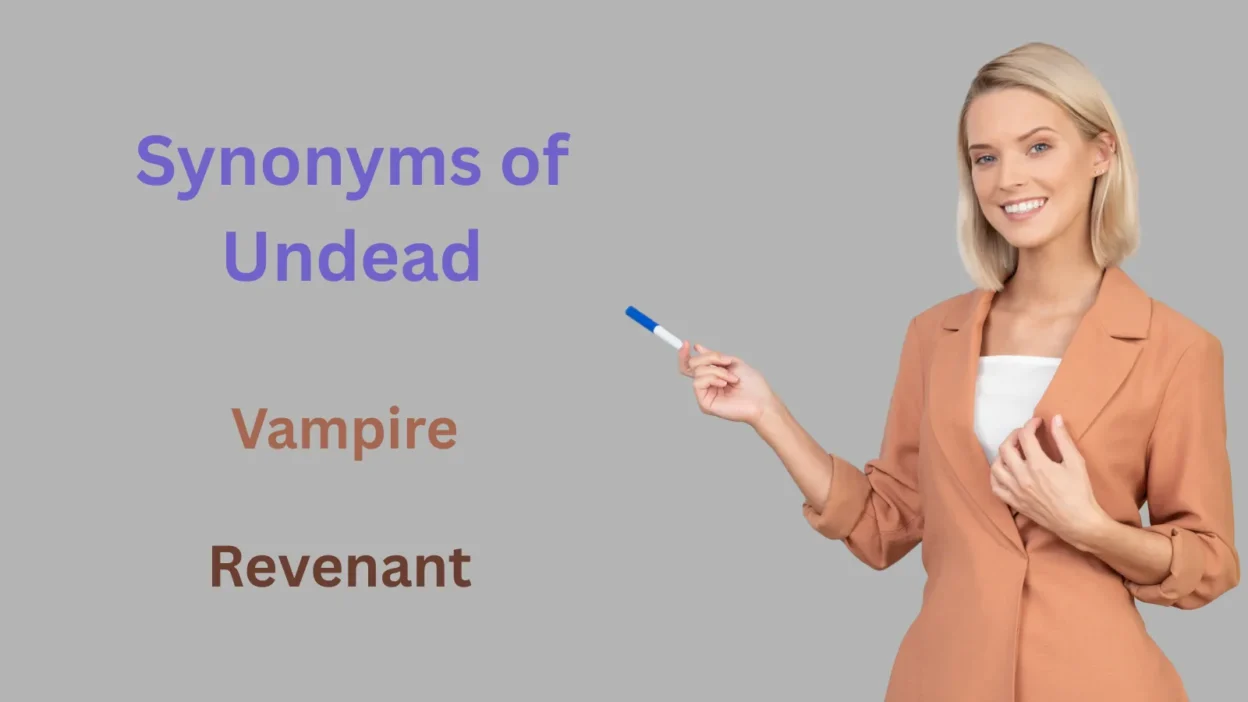
Synonyms of undead, such as zombie, vampire, and * revenant*, describe creatures or beings that are neither fully alive nor truly dead. For example, a vampire is undead in folklore because it walks the earth after death, feeding on the living.
If you’re exploring gothic tales, horror fiction, or fantasy adventures, choosing synonyms for undead brings your writing to life with suspense, intrigue, and a spooky edge.
In this guide, we’ll explore 30 rich undead alternatives, their meanings, and how to use them naturally in storytelling. Each term emphasizes a different aspect, from terror and danger to mystery and supernatural power.
What Does Undead Mean?
Undead refers to beings that are technically dead but still exhibit life-like qualities, often moving, thinking, or acting as if alive. The term is most commonly used in folklore, horror, and Halloween stories.
Undead creatures can take many forms, including:
- Zombies – reanimated corpses that wander or attack
- Vampires – immortal beings who feed on the living
- Ghosts or revenants – spirits or entities returned from the dead
Depending on the story, the undead can suggest danger, mystery, or supernatural power. It’s not just about being alive after death — it’s about crossing the boundary between life and death, creating suspense, fear, or fascination.
Synonyms & Related Words for Undead (And When to Use Them)
1. Zombie
Description: A reanimated corpse that acts without consciousness.
Example: “The zombie staggered through the ruins, hungry for life.”
Usage: Common in horror and pop culture; ideal for physical reanimation without emotion or will.
2. Vampire
Description: A living corpse that feeds on blood to sustain its immortality.
Example: “The vampire lingered in the shadows, drawn by the scent of life.”
Usage: Elegant, gothic tone; implies intelligence and allure.
3. Revenant
Description: A being returned from the dead, often seeking vengeance.
Example: “A revenant haunted the village, punishing those who wronged him.”
Usage: Literary or folkloric; suits serious, dramatic writing.
4. Ghost
Description: The spirit of a dead person appearing to the living.
Example: “A ghost drifted through the hallways, whispering lost names.”
Usage: Broadly familiar; emotional or haunting rather than horrific.
5. Specter
Description: A visible spirit or phantom, often frightening or symbolic.
Example: “The specter of failure haunted his thoughts.”
Usage: Formal, poetic; often metaphorical as well as literal.
6. Wraith
Description: A ghostly apparition seen before or after death.
Example: “A pale wraith hovered at the edge of the moor.”
Usage: Elegant and chilling; ideal for fantasy or dark poetry.
7. Ghoul
Description: A creature that feeds on corpses or haunts graveyards.
Example: “The ghoul emerged under the pale moonlight, gnawing bones.”
Usage: Horror and gothic fiction; vivid and grotesque.
8. Phantom
Description: An illusory or ghostly figure.
Example: “A phantom carriage rolled through the silent streets.”
Usage: Softer than “ghost”; atmospheric, mysterious tone.
9. Shade
Description: A spirit of the dead, especially in classical mythology.
Example: “The shades of the fallen roamed the underworld.”
Usage: Literary or mythological; carries historical or poetic weight.
10. Spirit
Description: The nonphysical essence of a being, often surviving death.
Example: “Her spirit remained bound to the old house.”
Usage: Neutral or reverent; spiritual, not always frightening.
11. Apparition
Description: A supernatural appearance, often sudden and eerie.
Example: “An apparition appeared in the mirror before fading away.”
Usage: Formal, descriptive; great for suspenseful moments.
12. Poltergeist
Description: A noisy, mischievous ghost that causes disturbances.
Example: “The poltergeist slammed doors and rattled the dishes.”
Usage: Modern ghost-lore; works for physical hauntings or chaos.
13. Spectral being
Description: A general term for ghostly entities.
Example: “Spectral beings roamed the battlefield at dusk.”
Usage: Academic or descriptive; suits analytical or narrative writing.
14. Walking Dead
Description: Corpses that walk again, often soulless and decaying.
Example: “The walking dead filled the city streets.”
Usage: Popular culture; dramatic and cinematic tone.
15. Corpse reanimated
Description: A dead body revived through supernatural or scientific means.
Example: “The corpse reanimated under the lightning storm.”
Usage: Suited for science fiction or horror realism.
16. Lich
Description: An undead sorcerer who maintains life through dark magic.
Example: “The lich guarded his phylactery deep within the crypt.”
Usage: Fantasy and gaming contexts; intellectual, powerful undead.
17. Skeleton
Description: Animated bones of a dead being.
Example: “A skeleton army rose from the graveyard.”
Usage: Fantasy or light horror; visual and action-oriented.
18. Deathless
Description: A being or soul that cannot die.
Example: “The deathless king ruled through centuries of decay.”
Usage: Poetic or mythic; suits epic fantasy or dark romance.
19. Immortal
Description: One who cannot die, though not necessarily undead.
Example: “The immortal wandered the ruins, weary of eternity.”
Usage: Philosophical or romantic tone; highlights endless existence.
20. Cursed soul
Description: A person trapped between life and death by a curse.
Example: “The cursed soul roamed until his sins were forgiven.”
Usage: Emotional and tragic; good for moral or gothic stories.
21. Haunt
Description: A diabolical spirit lingering in a familiar place.
Example: “The haunt appeared at midnight by the broken window.”
Usage: Folkloric; emphasizes attachment to a place or memory.
22. Necrotic being
Description: A creature sustained by death energy or decay.
Example: “Necrotic beings rose from the crypt, glowing with dark magic.”
Usage: Fantasy or gaming; fits magical or battle scenes.
23. Reanimated
Description: Brought back to life through unnatural forces.
Example: “The reanimated soldier marched without will or thought.”
Usage: Clinical or descriptive; works well in horror or sci-fi.
24. Unliving
Description: A poetic term for entities without life, yet still existing.
Example: “The unliving filled the castle halls with silence.”
Usage: Literary or gothic; subtle and atmospheric.
25. Half-dead
Description: Neither fully alive nor dead.
Example: “The half-dead wanderers howled in the snow.”
Usage: Emotional or horror tone; good for tragic or decaying imagery.
26. The damned
Description: Souls condemned after death to eternal suffering.
Example: “The cries of the damned echoed from the abyss.”
Usage: Religious or gothic settings; highly moral and dramatic.
27. Restless dead
Description: Spirits are unable to find peace.
Example: “The restless dead rose when the tomb was disturbed.”
Usage: Classic horror or folklore; sympathetic undertone.
28. Corpse-walker
Description: A reanimated body capable of movement.
Example: “The corpse-walker dragged itself into the spooky house.”
Usage: Fantasy or horror slang; modern, gritty feel.
29. Neither being
Description: An Entity from the underworld or a realm of the dead.
Example: “Nether beings slipped through cracks between worlds.”
Usage: Dark fantasy; mystical or cosmic tone.
30. Haunting presence
Description: A lingering energy of someone or something dead.
Example: “A haunting presence filled the room long after she left.”
Usage: Emotional or psychological; subtle and evocative.
How to Choose the Right Synonym
Selecting the right synonym for undead depends on tone, genre, and emotional intensity:
- Horror and Fear: Zombie, ghoul, poltergeist, walking dead, corpse-walker – evoke dread, decay, and chaos.
- Gothic or Poetic: Wraith, specter, deathless, unloving, cursed soul – create atmosphere and melancholy.
- Fantasy and Myth: Lich, shade, nether being, revenant – emphasize power, immortality, or dark magic.
- Spiritual or Emotional: Spirit, ghost, haunting presence, the damned – highlight sorrow or unresolved emotion.
- Modern Usage: Satiating fans of “The Walking Dead” might prefer zombie or reanimated, while writers seeking elegance might lean toward revenant or wraith.
Cultural tone matters, too. Western folklore favors ghosts and vampires, while Eastern tales often use spirits or ancestral shades to express reverence rather than fear.
Conclusion
Synonyms of undead help you convey the eerie, mysterious, and supernatural qualities of creatures that defy death. Words like zombie, vampire, revenant, and phantom each bring a unique shade of meaning, from horror and danger to mystique and immortality.
Using the right synonym lets you set the tone of your story — whether it’s chilling, thrilling, or fantastical.
These alternatives enrich your writing, giving readers a vivid sense of life, death, and everything in between.