
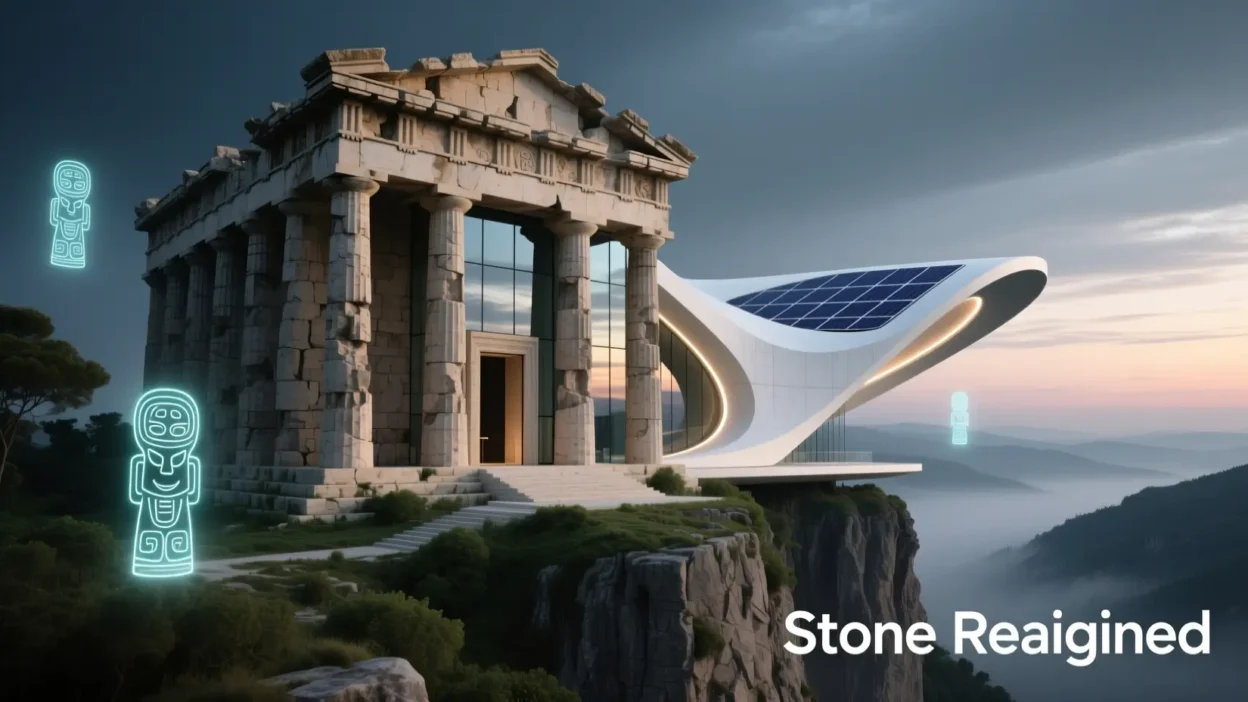
For thousands of years, stone has shaped humanity’s most enduring structures—from the pyramids of Giza and Greek temples to medieval fortresses and ancient cities carved into mountainsides. Revered for its strength, longevity, and raw beauty, stone has long symbolized permanence. Today, architects are rediscovering this ancient material, reinterpreting it through modern design philosophies, advanced technology, and sustainability-driven thinking.
Rather than treating stone as a relic of the past, contemporary architecture embraces it as a living material—one that bridges history and innovation. From minimalist homes to bold brutalist statements and sculptural contemporary landmarks, stone is being reimagined in ways that feel both timeless and forward-looking.
Minimalist Stone Architecture: The Power of Restraint
Minimalism is rooted in the belief that simplicity enhances meaning. When paired with stone, this philosophy allows the material’s natural texture, color, and imperfections to take center stage. Minimalist stone architecture is calm, deliberate, and deeply connected to nature.
Defining Characteristics
Pure Forms and Clean Geometry
Minimalist stone buildings rely on simple shapes—rectangles, cubes, and linear volumes. Ornamentation is stripped away, allowing the stone itself to become the visual focus.
Neutral and Earthy Color Palettes
Architects often limit palettes to whites, grays, beiges, and muted earth tones. This restrained approach enhances visual harmony and allows subtle stone variations to shine.
Light as a Design Element
Large openings, courtyards, and floor-to-ceiling glass allow natural light to interact with stone surfaces. Shadows shift throughout the day, bringing movement and depth to otherwise static walls.
Seamless Landscape Integration
Minimalist stone structures are often designed to feel embedded in their surroundings. Locally sourced stone helps buildings blend naturally into hillsides, deserts, or coastal terrains.
Noteworthy Examples
Casa de la Roca, Mexico
Designed by Cadaval & Solà-Morales, this residence appears carved directly from a rocky mountainside. Stone walls extend naturally from the terrain, while expansive glass panels dissolve the boundary between interior and exterior. The result is a modern sanctuary rooted in its environment.
Therme Vals, Switzerland
Peter Zumthor’s iconic spa is built from layered Valser quartzite sourced nearby. Its rectilinear geometry feels contemporary, yet the cavern-like interior evokes ancient bathhouses and geological formations—an immersive experience of stone, water, and light.
Brutalist Stone Architecture: Raw, Monumental, and Honest
Brutalism is often associated with exposed concrete, but its principles translate powerfully into stone. Brutalist stone architecture celebrates mass, material honesty, and structural clarity, creating buildings that feel almost geological in presence.
Core Elements
Exposed and Untreated Surfaces
Stone is left rough, chipped, or imperfect, revealing its natural origins. Tool marks, joints, and textures are not hidden—they become part of the aesthetic.
Bold, Monumental Forms
Brutalist stone structures often feel fortress-like, with thick walls, heavy volumes, and deep recesses that convey strength and permanence.
Visible Structure
Load-bearing walls, columns, and stone masses are openly expressed. The architecture tells you how it stands, emphasizing gravity and material strength.
Material Contrast
Rough stone is frequently paired with glass or steel. This contrast heightens visual drama and reinforces the raw power of stone against lighter, refined materials.
Influential Examples
The Salk Institute, USA
Designed by Louis Kahn, the Salk Institute blends concrete modernism with a striking travertine plaza. The stone introduces warmth, texture, and humanity, transforming an austere research complex into a place of reflection and inspiration.
Ensamble Studio’s Experimental Works, Spain
Projects like The Truffle challenge conventional construction methods. Rough stone cladding and cave-like interiors blur the line between architecture and landscape, evoking primal shelter while remaining unmistakably contemporary.
Contemporary Stone Architecture: Technology Meets Tradition
Contemporary stone design transcends rigid styles, blending minimalism, brutalism, and digital innovation. Today’s architects use stone as both structure and sculpture, enabled by cutting-edge tools and sustainable practices.
Hallmarks of Contemporary Stone Design
Advanced Fabrication Techniques
CNC milling, robotic carving, and digital modeling allow stone to be cut with extreme precision. Architects can now create complex geometries, perforated facades, and intricate patterns once impossible with traditional methods.
Hybrid Material Systems
Stone is combined with steel, glass, and timber to balance mass with lightness. This approach leverages stone’s durability while maintaining transparency, warmth, and flexibility.
Sustainability and Local Sourcing
Modern stone architecture prioritizes locally sourced and reclaimed materials to reduce environmental impact. Stone’s natural thermal mass also improves energy efficiency by regulating indoor temperatures.
Sculptural Expression
No longer confined to rigid blocks, contemporary stone structures feature curves, cantilevers, and flowing forms. Buildings appear carved, folded, or eroded—redefining stone as a dynamic material.
Why Stone Still Matters in Modern Architecture
Stone offers qualities few materials can match:
- Longevity: Structures can last centuries with minimal degradation
- Environmental Performance: Excellent thermal mass and low maintenance
- Cultural Continuity: Connects modern design to architectural heritage
- Emotional Weight: Conveys permanence, stability, and authenticity
In an era dominated by glass towers and lightweight materials, stone grounds architecture—both physically and emotionally.
Conclusion
Stone has never truly belonged to the past. From minimalist homes nestled in landscapes to monumental brutalist forms and technologically advanced contemporary designs, stone continues to evolve. Today’s architects are not merely using stone—they are reinterpreting it, honoring its ancient legacy while pushing its possibilities forward.
Once reserved for load-bearing walls and historic monuments, stone now shapes expressive, sustainable, and forward-thinking architecture. In reimagining stone, modern design proves that the oldest materials often hold the greatest potential for the future.