

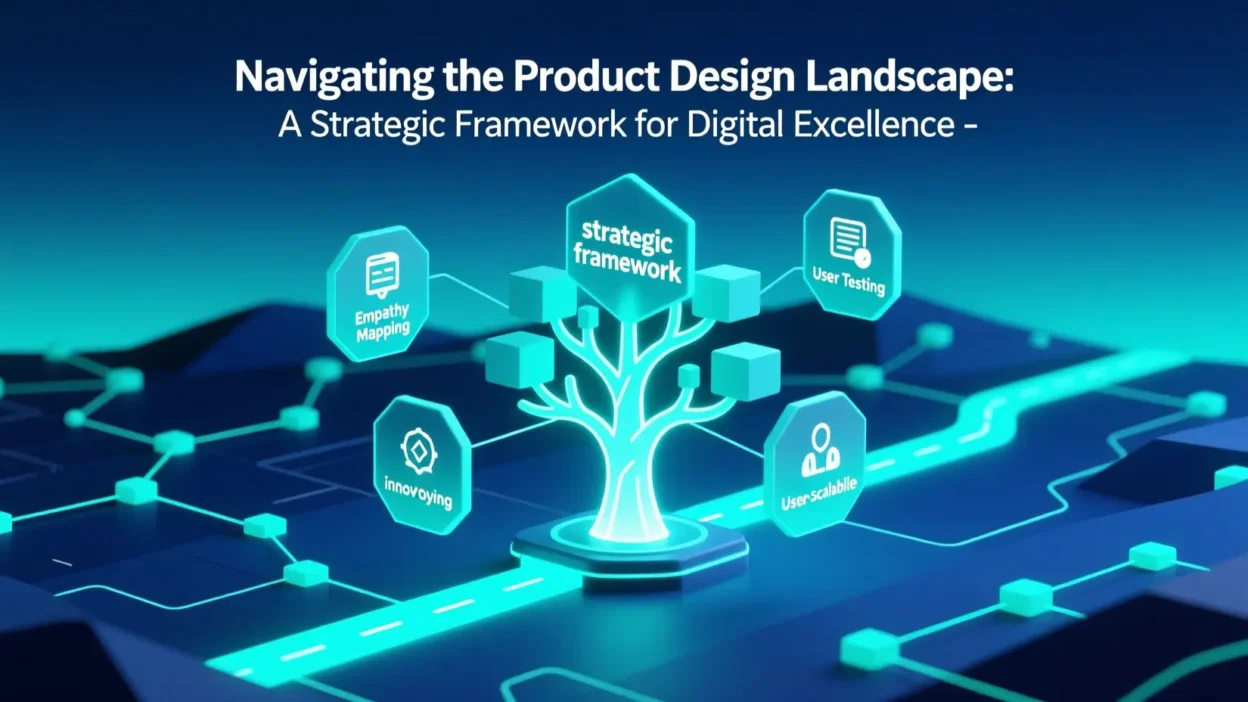
Digital transformation has redefined how organizations create, deliver, and capture value through technology products. In today’s competitive landscape, the question is no longer whether to invest in superior product design but how to identify and partner with agencies that transform strategic vision into compelling digital experiences. Exceptional product design goes beyond aesthetics—it combines research, innovation, and strategy to drive measurable business outcomes.
Understanding Product Design: Beyond Visuals
Product design is a systematic process focused on solving user problems while balancing user desirability, technical feasibility, and business viability. It integrates insights from psychology, technology, business strategy, and communication design to create experiences that resonate with users.
Modern digital product design has evolved from traditional industrial design, moving past physical form and manufacturing constraints to focus on:
- Responsive layouts and cross-platform consistency
- Interaction patterns and intuitive task flows
- Continuous improvement through iterative testing and user feedback
Digital experiences can adapt in real time, learn from user behavior, and update without physical constraints, opening new possibilities for personalization, intelligence, and engagement.
Choosing the Right Product Design Agency
Selecting a product design partner requires assessing methodology, domain expertise, and measurable impact. Key evaluation criteria include:
- User Research Capabilities: Evidence-based insights reduce reliance on assumptions.
- Interaction and Information Architecture: Logical task flows and content organization enhance usability.
- Visual Design Excellence: Aligns aesthetics with brand identity.
- Technical Fluency: Ensures designs are feasible and implementable across platforms.
Balanced teams—combining researchers, interaction designers, visual designers, and design technologists—deliver strategic outcomes beyond what isolated specialists can achieve.
Specialized Design Domains
Consumer vs. Enterprise Applications
- Consumer-focused agencies prioritize intuitive navigation, rapid onboarding, and engaging experiences.
- Enterprise-focused agencies handle complex workflows, data security, role-based permissions, and varied user skill levels.
Medical Product Design
Healthcare products require regulatory compliance, patient safety considerations, and stakeholder coordination. Effective medical design agencies balance usability with HIPAA regulations, FDA approvals, accessibility, and workflow integration.
AI Product Design
AI-driven products introduce challenges like probabilistic behavior, transparency, and user trust. Agencies specializing in AI create interfaces with clear mental models, explanation mechanisms, and override capabilities, while addressing ethical concerns such as bias, privacy, and autonomy.
Comprehensive Design and Development Services
Modern organizations often need more than design—they require integrated product design and development services:
- Strategic planning and research
- Technical architecture and full-stack development
- Quality assurance and post-launch optimization
- Brand and visual system integration
Integrated service delivery ensures design integrity, minimizes coordination costs, and accelerates time-to-market compared to fragmented vendor models.
Building High-Performance Product Design Teams
Effective teams balance specialization with cross-functional collaboration. Typical roles include:
- User Researchers: Gather behavioral insights
- Information Architects: Define content structure and navigation
- Interaction Designers: Map task flows and feedback mechanisms
- Visual Designers: Establish brand and aesthetic systems
- Design Technologists: Prototype and validate technical feasibility
Team culture also matters—psychologically safe environments, regular critique sessions, and continuous learning drive innovation and quality.
Evaluating Portfolios: Beyond Aesthetics
A strong portfolio should reveal problem-solving approaches, strategic thinking, and measurable outcomes rather than just polished visuals. Look for case studies detailing:
- Initial challenges and research insights
- Design rationale and exploration of options
- Implementation process and technical considerations
- Measurable results, including metrics, testimonials, or business impact
Relevant domain experience (e.g., healthcare, finance, AI) reduces project risk and accelerates value delivery.
Product and Service Integration
Many organizations now deliver hybrid product-service ecosystems, requiring design approaches that consider end-to-end customer journeys across multiple touchpoints. Service design complements product design by mapping backstage processes, organizational workflows, and technology interactions, ensuring cohesive omnichannel experiences.
UI and Graphic Design Systems
UI design focuses on interface layout, hierarchy, micro-interactions, and accessibility. Design systems codify reusable components, accelerating production while maintaining consistency. Graphic design establishes visual language, communicates brand identity, and ensures accessibility compliance, influencing every aspect from color palettes to interactive components.
Measuring Design Impact
Objective metrics are essential for evaluating design success:
- Conversion rates and task completion efficiency
- Time-on-task and user retention
- Qualitative insights from usability testing, surveys, and stakeholder interviews
Long-term success includes sustained engagement, scalability, and adaptability to evolving markets. Top agencies optimize for continuous improvement, not just launch performance.
Strategic Partnerships: The Path to Digital Excellence
Engaging a product design agency is a strategic investment, not a tactical purchase. Organizations that assess agency capabilities systematically, emphasize evidence-based approaches, and cultivate collaborative relationships maximize the value of design partnerships.
Elite agencies integrate:
- Strategic thinking with tactical execution
- Research-driven insights with creative innovation
- Business acumen with technical implementation
Their work drives measurable outcomes in healthcare, finance, AI, and emerging technologies, enabling companies to deliver transformative digital experiences that drive competitive advantage.
Conclusion
Exceptional product design is no longer optional—it’s a key differentiator in the digital marketplace.
Organizations that select strategic partners, invest in comprehensive processes, and foster collaboration position themselves to achieve superior user experiences, higher engagement, and sustained market success.
The difference between adequate and exceptional design often determines whether products merely function or transform the way users interact with technology.