
Curious about mogging meaning and why people keep using it online? Mogging is a popular slang term used across social media, gaming platforms, and casual conversations to describe someone outshining or outperforming others in appearance, skill, confidence, or social status.
Understanding mogging meaning is essential for navigating modern digital interactions—whether in texts, Twitter threads, Discord chats, or even dating apps—so you can respond appropriately and join in on the conversation.
In this article, we’ll explore the definition, origin, real-life examples, and how to use mogging correctly in different contexts.
What Does “Mogging” Mean in Slang?
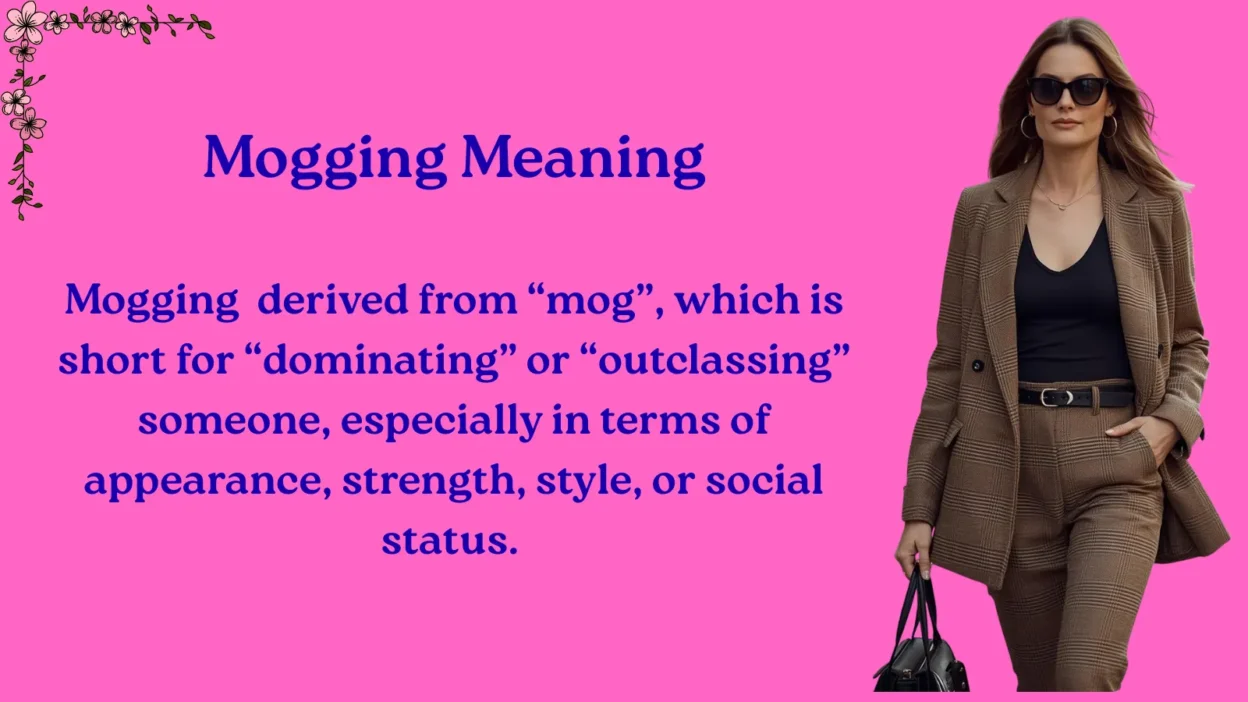
Mogging is a slang term derived from “mog”, which is short for “dominating” or “outclassing” someone, especially in terms of appearance, strength, style, or social status. When someone says, “He’s mogging everyone at the gym,” it usually means that he is outperforming or outshining others in that context.
In simple terms:
- Mogging = showing clear superiority or dominance over someone in a particular area.
Example 1:
- Alex: “Did you see Jake at the basketball game?”
- Sam: “Yeah, he’s mogging everyone with those moves.”
Example 2:
- Lily: “I think she’s mogging me in style.”
- Nina: “Don’t worry, you’ve got your own vibe!”
It’s often used casually to express admiration, playful rivalry, or mild jealousy. However, it’s not always negative—it can be lighthearted or humorous depending on the context.
Background & History
The term mog originated from online communities in the early 2010s. It became particularly popular on image boards and fitness or self-improvement forums. Users would describe situations where one person clearly outperformed or overshadowed others.
Over time, mogging evolved from niche online forums to mainstream social media, especially among younger audiences. It is often associated with visual or physical comparisons, like fitness, fashion, or gaming skills. Meme culture has also contributed to spreading the term, often paired with exaggerated visuals or humorous captions.
Today, mogging isn’t limited to physical appearance. It can refer to success, confidence, skill, or anything that makes one person stand out. Its use has expanded from online forums to texting, Discord chats, Twitter threads, and even casual spoken conversations.
Usage in Various Contexts
Mogging is versatile and used in multiple contexts. Here’s how it appears in daily life:
Social Media
- Post: “Bro, she’s mogging all her classmates with that outfit!”
- Meaning: She looks better or stands out in style.
Gaming
- Player1: “Dude, he’s mogging everyone in the raid.”
- Meaning: He is outperforming others in the game.
Casual Conversation
- Friend1: “I feel like I’m getting mogged at the party.”
- Friend2: “Chill, it’s all fun.”
- Meaning: Someone is outshining them socially.
Texting
- Text: “Stop mogging me with those memes 😩”
- Meaning: You’re overshadowing me with your meme collection.
Common Misconceptions & Clarifications
Some people confuse mogging with bullying or mean behavior, but it’s often not intended negatively. It can be:
- Playful teasing: Highlighting someone’s excellence in a friendly way.
- Admiration: Recognizing someone’s talent or appearance.
Misinterpretation Example:
- Tom: “You’re mogging me in the gym.”
- Jerry: “Wait, are you insulting me?”
Here, Tom meant outperforming, not mocking.
It’s also important to note that mogging is context-dependent. Used in a professional email, it could be confusing or inappropriate.
Similar Terms & Alternatives
Several slang terms share similar meanings:
| Term | Meaning | Example |
| Flexing | Showing off possessions or achievements | “He’s flexing his new car.” |
| Clout-chasing | Seeking attention or influence | “She’s clout-chasing online.” |
| Outshining | Standing out or surpassing others | “He’s outshining everyone.” |
| Dominating | Excelling or being superior | “They’re dominating the tournament.” |
While these terms overlap, mogging specifically emphasizes personal superiority in skill, looks, or status, often in casual or playful contexts.
How to Respond to This Term
Responses to mogging can vary depending on tone, context, and relationship.
Casual Response
- “Haha, thanks, I’ll try not to mog too hard 😎”
Funny Response
- “Stop mogging me or I’ll start mogging back 😏
Professional Response
- Avoid using the term in emails. Instead:
- “They performed exceptionally well in the project.”
Privacy-conscious Response
- “Not really paying attention to that.”
Responding appropriately ensures you maintain context while keeping conversations fun or respectful.
Regional or Cultural Differences
Mogging is mostly popular in English-speaking online communities. Usage may vary by region:
- US & UK: Frequently used on social media and gaming forums.
- Other countries: Often picked up through memes or streaming platforms.
Some regions may have local equivalents, like:
- Japan: “Kakkoii” (cool/awesome) for admiration.
- Brazil: “Arrasando” (crushing it) in social contexts.
Comparison with Similar Terms
| Term | Tone | Usage Context | Difference from Mogging |
| Flexing | Neutral/Brag | Casual/social | Focus on possessions, not skill |
| Clout | Slightly Negative | Social media | Attention-seeking aspect |
| Dominating | Neutral/Positive | Gaming/sports | Stronger competitive tone |
| Outshining | Neutral | General achievement | Broad, less slangy |
Usage in Online Communities & Dating Apps
On platforms like Tinder or Twitter, mogging may appear as:
- Highlighting attractiveness or achievements.
- Playful teasing among friends.
- Competition in gaming or fitness communities.
Tip: Respond casually or humorously. Avoid overthinking, as tone is key.
Example:
- Tinder chat:
- Alex: “Wow, you’re mogging me in your photos 😅”
- Jamie: “Haha, just trying my best 😉”
Hidden or Offensive Meanings
Most of the time, mogging is harmless. But context matters:
- It could be interpreted as mocking if said aggressively.
- It can be offensive when comparing sensitive topics like body image or income.
Always consider tone, intent, and relationship when using or responding to the term.
Suitability for Professional Communication
Mogging is informal slang. It is usually not appropriate in emails, meetings, or professional presentations.
Professional Alternatives:
- “Outperforming”
- “Excelling”
- “Standing out”
These convey a similar idea without informal slang risks.
FAQs
1. What does mogging mean in simple words?
- Mogging means outshining or outperforming someone in a particular area.
2. Is mogging rude?
- Not usually; it depends on context and tone.
3. Can I use mogging in a professional email?
- No, use alternatives like “outperforming” or “excelling.”
4. Where did mogging originate?
- From online communities and forums around 2010, it later spread via social media and memes.
5. Is mogging only about looks?
- No, it can refer to skills, confidence, social dominance, or achievements.
6. How do I respond if someone says they are mogging me?
- You can respond casually, humorously, or ignore, depending on comfort and context.
7. Are there similar slang words?
- Yes, terms like “flexing,” “outshining,” “clout-chasing,” and “dominating” are similar.
Conclusion :
Mogging is a versatile slang term used to describe someone outshining others in appearance, skills, or status. Its usage has grown from niche online communities to mainstream social media, gaming, and casual conversations. While it’s mostly playful or humorous, context and tone matter to avoid misunderstandings.
Understanding mogging meaning, its history, related terms, and appropriate responses can help you navigate conversations online, in gaming, and even in casual social situations.
Next time someone says they are mogging—or you feel mogged—now you’ll know exactly what it means and how to respond.