
Have you ever heard someone say they’re “miffed” and wondered what it means? Miffed Meaning refers to feeling slightly annoyed, irritated, or upset—usually over something minor. It’s a mild form of frustration, often expressed casually in conversations, texts, or social media posts.
People often use it like this:
- “I was a little miffed when he forgot my birthday.”
- “She seemed miffed after the meeting ended abruptly.”
In this article, we’ll explain what miffed means, explore its origin, show how it’s used in daily life, and provide examples to make its meaning clear.
What Does “Miffed” Mean?
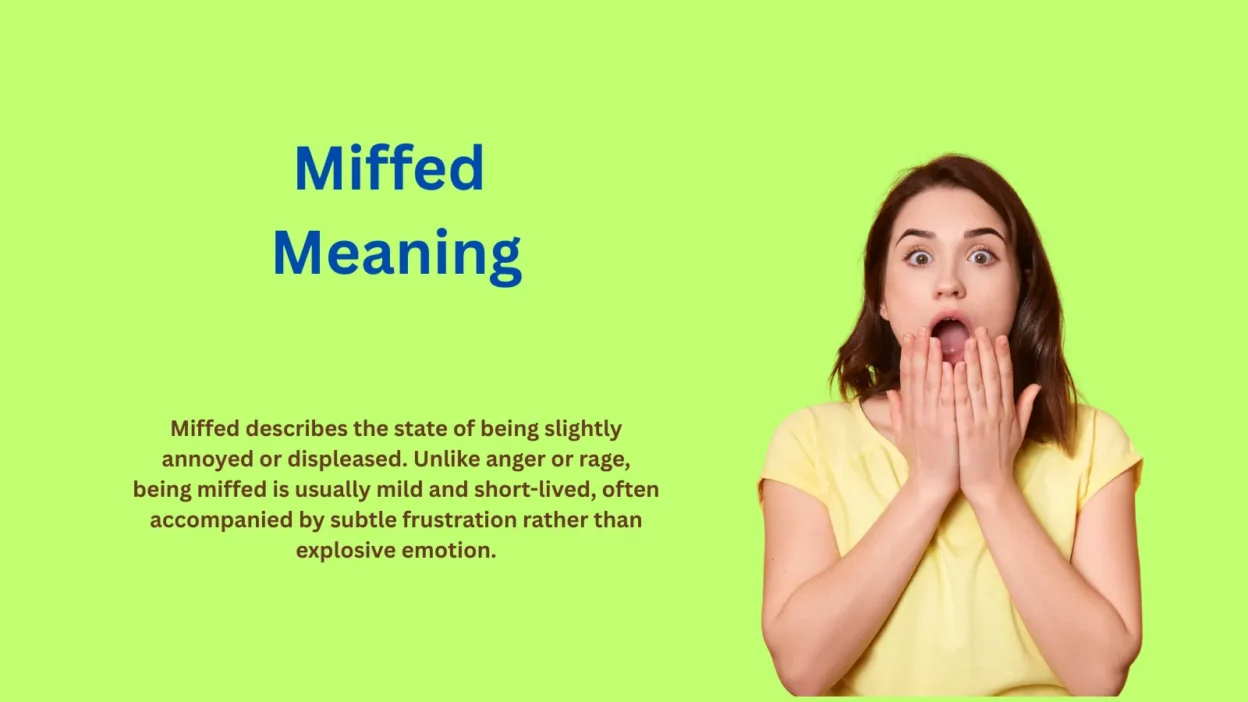
Miffed describes the state of being slightly annoyed or displeased. Unlike anger or rage, being miffed is usually mild and short-lived, often accompanied by subtle frustration rather than explosive emotion.
Example Sentences:
- “He was miffed that his favorite show got canceled.”
- “I felt miffed when my friend didn’t reply to my message.”
Key Points to Remember:
- Miffed = mildly annoyed, slightly upset.
- Often used in casual or informal contexts.
- Less intense than angry, furious, or enraged.
- Common in everyday conversations, writing, and social media.
Background & History
The word miffed has roots in early 20th-century English, originally meaning “to take offense or feel slightly insulted.” It became a common term in British and American English to describe minor irritation or annoyance.
Over time, miffed evolved into a casual expression used in texts, chats, and informal speech, often paired with humor or light sarcasm.
Usage in Various Contexts
Miffed can be used in multiple situations, depending on tone and platform.
In Conversation
- “I was a bit miffed that no one invited me to the party.”
- “She looked miffed after losing the game.”
In Texting or Messaging
- “Kinda miffed you didn’t call me back 😒”
- “I’m a little miffed, but it’s okay.”
On Social Media
- “Feeling miffed that my coffee spilled before work 😩 #MondayMood”
- “He posted something and I was slightly miffed #Oops”
Common Misconceptions & Clarifications
- “Miffed means angry.”
False — miffed is mild annoyance, not full-blown anger. - “It’s outdated slang.”
Not at all — still widely used in casual conversations and social media. - “Only used by older people.”
Anyone can use it; it’s a timeless word for minor irritation.
Example Dialogue:
- Alex: “Why do you look so miffed?”
- Mia: “Someone ate my snack without asking — just a little miffed!”
Similar Terms & Alternatives
| Term | Meaning | Example |
|---|---|---|
| Annoyed | Slightly irritated | “I was annoyed by the loud music.” |
| Peeved | Mildly angry or irritated | “She was peeved when the meeting ran late.” |
| Irked | Frustrated or bothered | “I was irked by the constant interruptions.” |
| Cross | Slightly angry or upset | “He was cross after missing the bus.” |
| Frustrated | Unable to achieve something | “I was frustrated with the slow internet.” |
Each word varies in intensity, but miffed specifically conveys mild irritation or offense.
How to Respond to This Term
When someone says they are miffed, your response depends on tone:
Casual:
- “Oh no! What happened?”
- “Aww, don’t be miffed!”
Funny:
- “Miffed? Should I bring snacks to make it better?”
- “Don’t worry, miffed energy detected 😂”
Professional/Neutral:
- “I understand — let’s try to fix this.”
- “Noted. Sorry for any inconvenience caused.”
Regional or Cultural Differences
Miffed is primarily British and American English, but understood globally.
- UK: Frequently used in casual speech to express mild annoyance.
- US: Used in informal conversations, messaging, and social media.
- Online Communities: Often appears in memes, humorous posts, or light complaints.
Comparison with Similar Terms
| Expression | Focus | Miffed Difference |
|---|---|---|
| Angry | Strong emotion | Miffed is mild, not intense |
| Upset | Emotional discomfort | Miffed is light irritation, not deep hurt |
| Irritated | Frustration or annoyance | Similar, but miffed is slightly old-fashioned |
| Peeved | Mild annoyance | Interchangeable, but miffed is more polite or casual |
Hidden or Offensive Meanings
Miffed is generally safe and non-offensive.
- It indicates minor irritation, not hostility.
- Tone and context clarify whether it’s playful or serious.
Suitability for Professional Communication
- Casual emails or chats: Acceptable.
- Formal/professional writing: Use alternatives like “slightly annoyed,” “frustrated,” or “displeased.”
Example:
Instead of “I’m miffed about the delay,” say “I’m slightly frustrated with the delay.”
FAQs
- What does miffed mean?
Feeling slightly annoyed, irritated, or upset. - Is miffed slang or formal?
Informal, casual English. - Why is miffed used?
To express mild annoyance without sounding harsh. - Can it be used in professional contexts?
Only in casual emails or chats; formal alternatives are better. - Is it commonly used today?
Yes — especially in messaging and casual speech.
Conclusion
The Miffed Meaning goes beyond a single word — it represents mild frustration, subtle annoyance, and light-hearted irritation. From everyday conversations to social media posts, being miffed conveys that something has bothered you, but it’s not serious.
Whether texting friends, replying on social media, or chatting casually, knowing how to use miffed correctly adds nuance and clarity to your communication.