

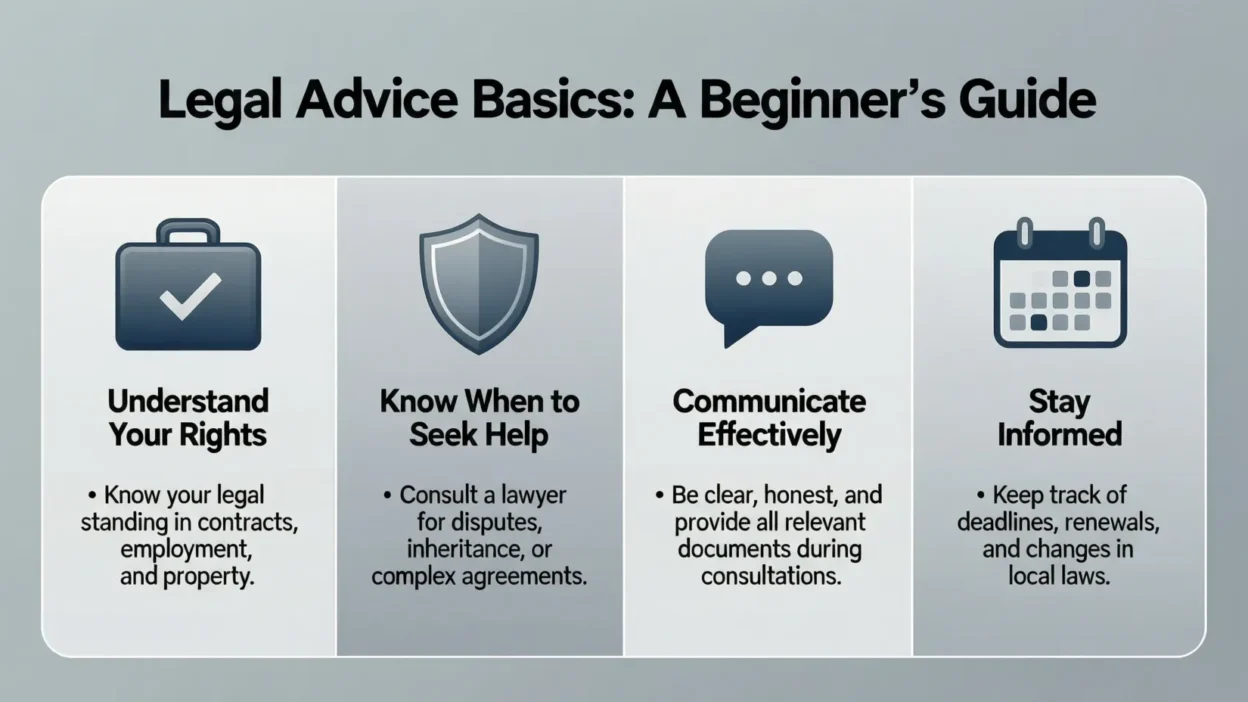
Understanding legal matters can feel overwhelming, especially if you’ve never dealt with contracts, disputes, or legal documents before. That’s why knowing the basics of legal advice is essential for protecting yourself, making informed decisions, and avoiding unnecessary risks. Many people confuse legal information with legal advice, or hesitate to consult a lawyer until it’s too late, which can lead to costly mistakes.
This guide will walk you through the fundamentals of legal advice, helping you understand when to seek a lawyer, how to find reliable legal support, and what practical steps you can take on your own. Whether you’re handling personal matters, business issues, or just want to know your rights, these tips will give you the confidence and clarity to navigate legal challenges safely. By learning the basics, you empower yourself to make smart, informed choices.
What Is Legal Advice?
Legal advice is professional guidance provided by a licensed lawyer or legal expert to help you understand your rights, obligations, and the best course of action in a legal situation. It goes beyond general information and applies specifically to your circumstances. Knowing what counts as legal advice is the first step in making informed decisions.
Key Points About Legal Advice:
- Personalized Guidance: It’s tailored to your unique situation.
- Actionable Recommendations: Lawyers tell you what you can or should do legally.
- Risk Assessment: Legal advice identifies potential consequences of your actions.
- Professional Expertise: It’s based on knowledge of laws, regulations, and legal procedures.
Examples of Legal Advice:
- A lawyer reviewing a contract and advising changes.
- Guidance on filing a lawsuit or responding to one.
- Recommendations on handling a dispute with a landlord or employer.
Understanding this distinction helps you know when to act on your own and when to consult a professional.
Legal Advice vs. Legal Information
It’s important to understand the difference between legal advice and legal information, because confusing the two can lead to serious mistakes.
Legal Information:
- General facts about laws and regulations.
- Can be found online, in books, or through official websites.
- Doesn’t take your personal situation into account.
- Examples: “The minimum wage in my state is $15 per hour” or “You must file taxes by April 15.”
Legal Advice:
- Personalized guidance based on your specific circumstances.
- Only a licensed lawyer can give official legal advice.
- Includes recommendations on what actions to take or avoid.
- Examples: A lawyer telling you how to respond to a lawsuit or reviewing your lease agreement.
Why This Matters:
Relying on general legal information when you need advice can put you at risk. Knowing the difference helps you make smart decisions and seek professional help when necessary.
When You Need a Lawyer
Knowing when to consult a lawyer can save you time, money, and stress. Not every legal situation requires professional help, but some matters are too complex or risky to handle on your own.
Situations That Usually Require a Lawyer:
- Contracts and Agreements: Signing, reviewing, or negotiating business or personal contracts.
- Legal Disputes: Lawsuits, property disputes, or conflicts with employers.
- Criminal Matters: Arrests, charges, or criminal investigations.
- Family Law Issues: Divorce, child custody, or adoption.
- Business Matters: Starting a business, partnership agreements, or compliance with laws.
Why It’s Important:
- Lawyers help you understand your rights and obligations.
- They reduce the risk of costly mistakes.
- Professional guidance ensures your actions are legally compliant.
Even if your case seems simple, consulting a lawyer for advice early on can prevent problems from escalating.
Risks of Self-Representation
Handling legal matters on your own may seem cost-effective, but it carries serious risks. Without professional guidance, mistakes can lead to legal complications, financial loss, or even penalties.
Common Risks of Self-Representation:
- Misunderstanding the Law: Laws are complex, and applying them incorrectly can hurt your case.
- Missing Deadlines: Court filings, responses, or appeals often have strict deadlines.
- Incomplete Documentation: Missing or improperly prepared documents can weaken your case.
- Emotional Decisions: Personal involvement can cloud judgment and affect negotiation or litigation.
- Higher Costs Later: Mistakes may lead to more expensive legal problems in the future.
Tips If You Must Represent Yourself:
- Research your legal issue carefully.
- Keep all documents organized.
- Stick to facts and avoid emotional arguments.
- Seek at least one consultation with a licensed lawyer for guidance.
Understanding these risks helps you decide when professional help is essential.
How to Find Reliable Legal Advice
Finding trustworthy legal advice is essential to ensure your rights are protected and your decisions are sound. Not all lawyers or online sources offer the same level of expertise, so it’s important to know what to look for.
Tips for Finding Reliable Legal Advice:
- Check Credentials: Ensure the lawyer is licensed and in good standing with your local bar association.
- Experience Matters: Look for lawyers who specialize in the area of law relevant to your situation.
- Read Reviews and Testimonials: Client feedback can indicate reliability and professionalism.
- Ask Questions: Clarify their approach, fees, and the process before hiring.
- Consult Multiple Sources: Getting a second opinion can provide clarity and confidence.
Additional Resources:
- Local bar associations often provide referral services.
- Legal aid organizations can connect you with affordable or free assistance.
- Trusted online platforms may offer verified legal consultations.
By carefully choosing your legal advisor, you can avoid mistakes, save time, and get accurate guidance tailored to your needs.
Free and Affordable Legal Assistance
Legal help doesn’t always have to be expensive. There are many ways to get free or low-cost legal advice without compromising quality.
Options for Free or Affordable Legal Assistance:
- Legal Aid Clinics: Nonprofit organizations offer free consultations for eligible individuals.
- Pro Bono Services: Some lawyers provide free services to clients in need.
- Law School Clinics: Law students, supervised by licensed attorneys, can assist with basic legal matters.
- Government Resources: Many official websites provide accurate legal information and guidance.
- Online Platforms: Verified online legal services can offer affordable consultations or document reviews.
Tips to Maximize These Services:
- Prepare all relevant documents before your consultation.
- Be clear about your legal issue to get the most useful advice.
- Confirm eligibility requirements for free services in advance.
Using these resources allows you to access reliable legal guidance without breaking the bank, especially for simple or urgent matters.
Common Misconceptions About Legal Advice
Many people have misunderstandings about legal advice, which can lead to mistakes or unnecessary worry. Knowing the facts helps you make smarter decisions.
Common Misconceptions:
- “Legal advice is always expensive.”
- While some services can be costly, free or affordable options exist.
- “I can handle everything myself.”
- Self-representation may be possible for minor issues, but professional guidance is safer for complex matters.
- “All online legal advice is trustworthy.”
- Only verified sources or licensed lawyers can provide accurate advice tailored to your situation.
- “Lawyers just complicate things.”
- Good lawyers simplify the process and help you understand your rights.
- “Legal advice is only for big problems.”
- Small issues, like contracts or landlord disputes, often benefit from professional guidance.
Why This Matters:
Understanding these misconceptions empowers you to seek the right help at the right time and avoid unnecessary risks.
Practical Steps Before Consulting a Lawyer
Being prepared before meeting a lawyer can save time, reduce stress, and help you get the most effective advice.
Steps to Take Before Consulting a Lawyer:
- Gather All Relevant Documents: Contracts, emails, receipts, and any evidence related to your case.
- Write Down Key Questions: List what you want to know and clarify your goals.
- Understand Your Situation: Review the facts and timeline of events so you can explain clearly.
- Research Basic Legal Information: Knowing general terms or procedures can make your consultation more productive.
- Plan Your Budget: Understand potential costs and ask about fees upfront.
- Be Honest and Open: Provide all details—omissions can affect advice quality.
By following these steps, you ensure that your lawyer can give precise, tailored guidance, and you’ll feel more confident in making legal decisions.
Understanding Legal Rights and Responsibilities
Knowing your legal rights and responsibilities is essential for protecting yourself and making informed decisions. Awareness of the law empowers you to act confidently in personal, professional, and financial matters.
Key Rights Everyone Should Know:
- Employment Rights: Fair pay, safe working conditions, and protection against discrimination.
- Property Rights: Ownership, rental agreements, and tenant protections.
- Consumer Rights: Protection against fraud, defective products, or unfair business practices.
- Privacy Rights: Control over personal information and digital data.
- Contractual Rights: Understanding agreements you sign and obligations you must fulfill.
Responsibilities to Keep in Mind:
- Following laws and regulations applicable to your situation.
- Honoring contracts and agreements.
- Providing truthful information in legal processes.
- Meeting deadlines for filings or responses.
Being aware of your rights and responsibilities allows you to navigate legal matters confidently and avoid unnecessary problems.
Tips for Protecting Yourself Legally
Taking simple precautions can help you avoid legal problems and protect your interests.
Practical Tips:
- Keep Records: Save all contracts, receipts, emails, and communications.
- Read Before Signing: Always review contracts carefully before signing anything.
- Avoid Verbal Agreements: Whenever possible, get agreements in writing.
- Use Reputable Templates: If using legal forms, ensure they come from reliable sources.
- Stay Informed: Keep up-to-date on laws that may affect you personally or professionally.
- Ask Questions: Don’t hesitate to clarify terms or procedures with a lawyer.
- Document Disputes: Record details of conflicts or incidents for future reference.
Following these tips helps you reduce risk, prevent misunderstandings, and maintain control over your legal matters.
Legal Advice in Digital Spaces
With the rise of online resources, many people turn to the internet for legal guidance. While convenient, it’s important to know the risks and limitations of digital legal advice.
Key Points About Online Legal Advice:
- Not All Sources Are Reliable: Only information from licensed professionals or official websites can be trusted.
- Generic Advice vs. Personalized Advice: Online guides may not consider your specific situation.
- Beware of Scams: Some websites or “legal advisors” may provide misleading or false guidance.
- Safe Online Options: Verified legal platforms and law firm websites can offer legitimate consultations.
- Supplement, Don’t Replace: Use online resources for general knowledge but consult a lawyer for actionable guidance.
Being cautious in digital spaces ensures that you receive accurate advice and avoid mistakes that could cost time or money.
When to Seek Specialized Legal Advice
Some legal matters are too complex for general guidance and require a lawyer with specialized expertise. Knowing when to seek a specialist can save time, money, and stress.
Situations Requiring Specialized Legal Advice:
- Family Law: Divorce, child custody, adoption, or domestic disputes.
- Criminal Law: Arrests, charges, or criminal investigations.
- Business Law: Starting a business, contracts, intellectual property, or compliance issues.
- Real Estate Law: Buying, selling, leasing, or property disputes.
- Immigration Law: Visas, citizenship, and residency matters.
- Tax Law: Complex tax issues, audits, or planning.
Why Specialized Advice Matters:
- Experts understand specific rules and regulations in their field.
- They can anticipate challenges that general lawyers might overlook.
- Specialized guidance increases your chances of a favorable outcome.
Consulting the right specialist ensures that your legal matter is handled accurately and efficiently.
Building a Relationship With Your Lawyer
A strong relationship with your lawyer can make legal processes smoother and more effective. Good communication ensures your case is handled properly and your questions are answered.
Tips for Building a Positive Lawyer Relationship:
- Be Honest and Transparent: Share all relevant facts, even uncomfortable details.
- Ask Questions: Clarify legal terms, processes, and potential outcomes.
- Understand Fees and Billing: Make sure you know how your lawyer charges and what to expect.
- Communicate Regularly: Stay in touch for updates and guidance.
- Respect Professional Expertise: Listen to advice and follow recommended steps.
- Provide Documentation Promptly: Give all necessary files or evidence on time.
By building trust and maintaining clear communication, you can maximize the value of your legal advice and achieve better results.
Conclusion
Understanding the basics of legal advice is essential for making informed and confident decisions. By knowing the difference between legal advice and general information, recognizing when to consult a lawyer, and preparing properly, you can protect your rights and avoid costly mistakes. Free and affordable resources, combined with careful research, make legal guidance accessible to everyone. Always stay informed, ask questions, and build a trusting relationship with your legal advisor.
Remember, knowledge is your best protection in legal matters. Taking the right steps early ensures you handle issues responsibly, efficiently, and confidently. Whether dealing with contracts, disputes, or personal rights, understanding legal advice basics empowers you to navigate the law safely and effectively.