
Freelancing is no longer just a side hustle—it has become a powerful career choice for people who want freedom, flexibility, and financial growth in 2026. With businesses hiring global talent, remote work becoming the norm, and AI tools reshaping how freelancers work, there has never been a better time to start freelancing. Yet, many beginners struggle because they jump in without the right guidance, clear direction, or proven strategies.
This guide is designed to give you practical, real-world freelancing tips that actually work. Whether you are a student, a professional looking to switch careers, or someone searching for extra income, these insights will help you avoid common mistakes and move forward with confidence. You will learn how to choose the right niche, find quality clients, price your services correctly, and build long-term success. If you want a freelancing career that is sustainable—not stressful—this complete 2026 guide will show you exactly where to begin and how to grow.
What Is Freelancing? A Simple Explanation
Freelancing means working independently and offering your skills or services to clients without being tied to a single employer. Instead of a fixed 9–5 job, freelancers work on projects or contracts and get paid per task, per hour, or per project. You are essentially self-employed, which means you control who you work with, how much you charge, and when you work.
In today’s digital world, freelancing mostly happens online. Clients from different countries hire freelancers for services like writing, graphic design, web development, digital marketing, video editing, virtual assistance, and many more. Freelancers can find work through platforms like freelance marketplaces, social media, personal websites, or direct outreach.
Unlike traditional jobs, freelancing offers flexibility and independence, but it also requires responsibility. You manage your own time, income, clients, and growth. Simply put, freelancing is running your own small business using your skills—and with the right approach, it can become a stable and rewarding long-term career.
Is Freelancing Right for You?
Freelancing is not just about having a skill—it is about having the right mindset and habits. Before starting, it is important to understand whether this career path suits your personality, goals, and lifestyle. Freelancers do not have a fixed salary or guaranteed work, especially in the beginning. This means you must be comfortable with uncertainty and willing to stay patient while building momentum.
Successful freelancers are usually self-disciplined, consistent, and proactive. You need to manage your own time, meet deadlines without supervision, and communicate professionally with clients. If you prefer clear instructions and a fixed routine, freelancing may feel challenging at first. However, if you enjoy independence, learning new skills, and solving problems on your own, freelancing can be very rewarding.
Financial readiness also matters. It is best to have some savings or a backup plan while you grow. Freelancing rewards those who treat it like a business, not a shortcut. If you are willing to learn, adapt, and stay consistent, freelancing can be the right long-term career choice for you.
Choosing the Right Freelancing Niche
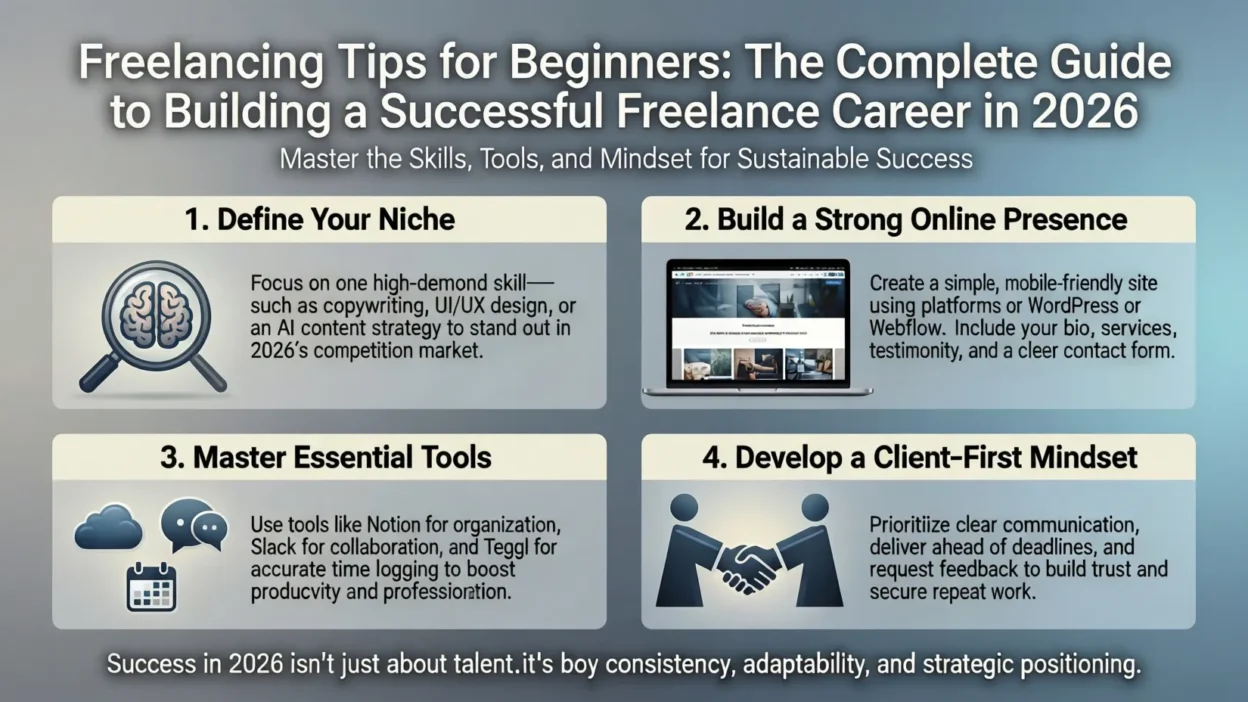
Choosing the right niche is one of the most important freelancing tips for long-term success. A niche means focusing on one specific skill or service instead of trying to do everything. Clients prefer freelancers who clearly understand their problem and offer a specialized solution. When you position yourself as a specialist, you attract better clients and can charge higher rates.
Start by identifying your existing skills, interests, or experience. Then, check if there is real demand for those skills in the market. Popular freelancing niches in 2026 include content writing, SEO, graphic design, web development, UI/UX design, video editing, social media management, and AI-related services. The best niche is one that sits at the intersection of what you can do, what people are paying for, and what you are willing to learn.
Essential Skills Every Freelancer Must Learn
To succeed in freelancing, you need more than just one technical skill. While your main service—such as writing, design, development, or marketing—gets you hired, other supporting skills help you keep clients and grow your income. Strong communication is one of the most important skills. You must understand client requirements clearly, ask the right questions, and explain your work in a professional way.
Time management is another critical skill. Freelancers handle multiple projects, deadlines, and clients at the same time. Learning how to plan your day, prioritize tasks, and avoid distractions will directly impact your productivity and earnings. Along with this, basic business skills such as pricing, negotiation, and personal branding are essential.
In 2026, freelancers also benefit from learning how to use AI and productivity tools to work faster and smarter. The most successful freelancers are continuous learners. They regularly upgrade their skills to stay competitive and relevant in a fast-changing market.
Building a Strong Freelance Portfolio
A strong portfolio is often more important than degrees or certifications in freelancing. Clients want to see proof of your skills, not just hear about them. Your portfolio shows what you can do, how you solve problems, and the quality of your work. Even if you are a beginner with no paid experience, you can still build an effective portfolio.
Start by creating sample projects related to your chosen niche. For example, writers can create blog posts, designers can design mock brand assets, and developers can build demo websites. These samples should look professional and clearly reflect the type of work you want to get paid for. Quality matters more than quantity.
Your portfolio can be a personal website, a PDF document, or a profile on freelancing platforms. Each project should include a short explanation of the goal, your process, and the result. Keep it simple, updated, and focused on your niche. A well-presented portfolio builds trust and significantly increases your chances of getting hired.
Creating High-Converting Freelance Profiles
Your freelance profile is often the first impression clients have of you, and it plays a major role in whether they contact you or not. A high-converting profile clearly explains who you help, what problem you solve, and why you are the right choice. Instead of listing skills only, focus on benefits and results for the client.
Start with a strong headline that includes your main service and niche. For example, instead of saying “Freelancer,” say “SEO Content Writer for Tech & SaaS Brands.” In your profile description, speak directly to the client’s needs and explain how your skills can help them achieve their goals. Keep the language simple, professional, and client-focused.
Use a clean, friendly profile photo to build trust, and make sure your portfolio samples are relevant and updated. Adding clear service packages, response time, and availability also improves conversions. A well-optimized profile not only attracts more clients but also helps freelance platforms rank you higher in search results.
Finding Freelance Clients Consistently
Finding clients is one of the biggest challenges for new freelancers, but with the right strategies, you can build a steady stream of work. Start by exploring freelance marketplaces like Upwork, Fiverr, and Freelancer, which connect you with clients worldwide. Optimize your profiles and proposals on these platforms to increase visibility.
Direct outreach is another powerful method. Reach out to potential clients via LinkedIn, email, or social media, showing that you understand their needs and can solve their problems. Personalized messages work far better than generic pitches. Networking—both online and offline—can also generate referrals and long-term clients.
Content marketing is a growing trend in 2026. Sharing valuable insights related to your niche on blogs, social media, or communities builds authority and attracts clients organically. Remember, consistency matters. Don’t rely on one source of clients; combine platforms, outreach, and personal branding to ensure a continuous flow of projects and sustainable freelancing growth.
Writing Winning Freelance Proposals
A well-crafted proposal can make the difference between landing a client and getting ignored. The key is to focus on solving the client’s problem, not just listing your skills. Every proposal should show that you understand the client’s needs and have a clear plan to deliver results.
Start with a personalized greeting and mention something specific from the client’s project to show that you’ve read their requirements carefully. Then, explain how you will approach the project, what deliverables you will provide, and the timeline for completion. Keep your language simple, professional, and confident.
Include your relevant portfolio samples to back up your claims. If the project involves payment, clearly outline your pricing and terms without being pushy. Finally, end with a call-to-action, encouraging the client to reach out or schedule a discussion. A thoughtful, customized proposal shows professionalism and significantly increases your chances of getting hired.
Pricing Your Freelance Services Correctly
Pricing is one of the most important aspects of freelancing, and many beginners struggle with it. Setting the right price ensures that your work is valued, clients are serious, and your freelancing career is sustainable. There are three common pricing methods: hourly rates, fixed project fees, and value-based pricing. Each has its advantages depending on the type of project and client.
For beginners, start with competitive but realistic rates that reflect your skill level. Avoid underpricing just to win clients—it can harm your long-term growth. As you gain experience and results, gradually increase your rates to match the value you deliver. Always communicate pricing clearly in proposals and contracts to avoid confusion.
Additionally, research the market rates in your niche, consider the complexity of the project, and factor in your time and expertise. Correct pricing not only improves income but also attracts clients who respect your work and are willing to pay for quality.
Client Communication & Relationship Management
Strong communication is essential for freelancing success. Clear, professional, and timely communication builds trust, prevents misunderstandings, and increases the chances of repeat work. Always set expectations upfront about deadlines, deliverables, and revisions to avoid conflicts later.
When interacting with clients, listen carefully, ask clarifying questions, and confirm your understanding of the project. Respond promptly to messages and provide updates regularly, even if progress is slow. Handling feedback gracefully is equally important—accept constructive criticism without arguing and implement changes efficiently.
Building long-term relationships is key to sustainable freelancing. Happy clients often return with more projects and refer you to others. By maintaining professionalism, delivering quality work, and showing reliability, you can transform one-time clients into loyal partners, ensuring a steady income and growth over time.
Freelance Contracts, Payments & Legal Basics
One of the most overlooked freelancing tips is understanding contracts, payments, and legal protections. Freelancers are essentially running their own small business, so formal agreements are crucial to protect your work, income, and reputation. A contract clearly defines the project scope, deadlines, payment terms, and revision policies, reducing misunderstandings.
Use written agreements for every project, even small ones. Include key clauses like deliverables, timelines, payment schedule, and rights to the work. For payments, offer secure methods such as PayPal, Wise, or direct bank transfers, and always invoice promptly. If clients delay payments, follow up professionally but firmly.
Freelancers should also be aware of basic tax obligations depending on their country, keep records of income and expenses, and understand local legal requirements for self-employment. Proper contracts, clear payment processes, and legal awareness give you peace of mind and allow you to focus on delivering high-quality work confidently.
Time Management & Productivity for Freelancers
Time management is critical for freelancers because you are your own boss, and no one else is enforcing deadlines. Without structure, projects can pile up, and stress can build quickly. Successful freelancers learn to plan, prioritize, and work efficiently to maximize both income and personal freedom.
Start by creating a daily or weekly schedule, allocating specific blocks for client work, marketing, learning, and breaks. Use productivity tools like Trello, Asana, Notion, or Google Calendar to track tasks and deadlines. Avoid multitasking, which can reduce efficiency—focus on one task at a time for better results.
Preventing burnout is equally important. Set boundaries with clients regarding working hours, take regular breaks, and separate work from personal life. By managing time wisely, you can handle multiple clients, meet deadlines consistently, and maintain high-quality work while enjoying the freedom that freelancing offers.
Scaling Your Freelance Business
Once you’ve established yourself as a freelancer, the next step is scaling your business to increase income without overworking. Scaling means finding ways to grow your revenue, reach more clients, and add value while maintaining quality and efficiency.
Start by increasing your rates as your skills and portfolio improve. Consider offering premium packages or specialized services that provide more value to clients. Another strategy is outsourcing certain tasks, such as administrative work, design, or research, allowing you to focus on high-value activities.
Building a personal brand also helps attract higher-paying clients and more opportunities. You can expand your presence through social media, blogging, or networking within your niche. Scaling a freelance business isn’t about working harder—it’s about working smarter, leveraging systems, and strategically growing your services to achieve sustainable success.
Common Freelancing Mistakes to Avoid
Freelancing can be extremely rewarding, but beginners often make mistakes that slow growth or reduce income. Being aware of these pitfalls helps you avoid setbacks and build a smoother career path.
- Relying on a single client – Diversify your client base to reduce risk if one project ends.
- Ignoring contracts – Always have agreements in writing to protect your work and payment.
- Saying yes to everything – Overcommitting leads to burnout and lower-quality work.
- Underpricing services – Charging too little undervalues your skills and attracts low-quality clients.
- Neglecting skill improvement – The market evolves quickly; continuously upgrading your skills keeps you competitive.
- Poor communication – Missed messages or unclear updates can ruin client relationships.
- Lack of organization – Without tracking projects, deadlines, and finances, freelancers can become overwhelmed.
Avoiding these mistakes allows you to work smarter, maintain professionalism, and grow steadily in your freelance career.
Best Tools & Resources for Freelancers (2026)
Using the right tools can dramatically improve productivity, efficiency, and client satisfaction in freelancing. In 2026, technology—especially AI—has made it easier than ever to manage projects, communicate, and deliver high-quality work.
Project Management Tools
- Trello / Asana / Notion – Organize tasks, track deadlines, and manage multiple clients efficiently.
Communication Tools
- Slack / Zoom / Microsoft Teams – Maintain clear communication with clients and collaborators.
Finance & Invoicing Tools
- PayPal, Wise, QuickBooks, Wave – Send invoices, track payments, and manage expenses.
AI & Productivity Tools
- ChatGPT, Grammarly, Jasper AI, Canva AI – Assist with writing, design, content generation, and editing.
Learning Platforms & Communities
- Coursera, Udemy, Skillshare, LinkedIn Learning, Freelance communities on Reddit & Discord – Upgrade your skills and network with other freelancers.
Choosing the right tools not only saves time but also enhances the quality of your work, helping you scale your freelance business faster and more efficiently.
Freelancing Tips for Beginners
Starting your freelance career can feel overwhelming, but following the right strategies can fast-track your success. Here’s a step-by-step approach for beginners:
- Start with a clear niche – Focus on a specific skill or service where you can stand out.
- Build a small portfolio – Create sample projects even if you don’t have paid clients yet.
- Set realistic goals – Define income targets, number of clients, and skill milestones for your first 3–6 months.
- Create a strong profile – Optimize your profile on freelance platforms and showcase your work clearly.
- Send personalized proposals – Tailor each pitch to the client’s project, showing you understand their needs.
- Learn time management – Plan your day, track deadlines, and avoid distractions.
- Invest in learning – Take online courses or use AI tools to improve your skills continually.
By following these beginner-friendly tips, you can gain your first clients, build credibility, and grow confidence, laying a strong foundation for a sustainable freelance career.
Advanced Freelancing Tips for Experienced Professionals
Once you have gained experience and built a client base, freelancing becomes less about survival and more about strategic growth and maximizing income. Advanced freelancers focus on improving their brand, attracting premium clients, and creating systems for efficiency.
- Specialize further – Become an authority in a niche, e.g., “SEO content writing for SaaS companies” instead of general writing.
- Raise premium rates – Charge based on the value you deliver, not just time spent.
- Build a personal brand – Share insights, case studies, and thought leadership through blogs, LinkedIn, or social media.
- Leverage recurring clients – Offer retainer packages or ongoing services for predictable income.
- Outsource low-value tasks – Delegate admin, research, or routine work to focus on high-impact activities.
- Create passive income streams – Sell templates, courses, or digital products related to your expertise.
These strategies help experienced freelancers scale their business, increase revenue, and achieve long-term career stability while working smarter, not harder.
FAQs About Freelancing
Here are some of the most common questions beginners and even experienced freelancers ask, along with practical answers:
1. How long does it take to succeed in freelancing?
Success varies, but most freelancers start earning steady income within 3–6 months if they are consistent, follow proven strategies, and continually improve their skills.
2. Can freelancing be a full-time career?
Yes! Many freelancers earn more than traditional jobs. Building a full-time freelance career requires dedication, strong client relationships, and effective business management.
3. Is freelancing safe and stable?
Freelancing can be stable if you diversify clients, maintain contracts, and plan finances carefully. Avoid relying on a single client or inconsistent work sources.
4. What skills pay the most in freelancing?
In 2026, skills like web development, AI-related services, digital marketing, SEO, UX/UI design, and specialized writing tend to command higher rates.
5. How do I get clients with no experience?
Start with sample projects, optimize your freelance profiles, send personalized proposals, and leverage networks like LinkedIn or online communities.
6. Do I need a portfolio to start freelancing?
Yes. Even beginner portfolios with sample projects or personal work show clients your capabilities and professionalism.