
From texting your crush to chatting with friends, Dry Text Meaning often comes up when conversations suddenly feel one-sided or boring. In simple terms, “dry text” refers to short, unengaging, or emotionless messages — the kind that make a conversation feel flat.
If someone replies with just “ok,” “lol,” or “yeah,” without adding much else, that’s a dry text. It’s a common term in modern texting and social media slang used to describe minimal effort in conversation.
People use it like this:
- “He’s such a dry texter. I never know what to say next.”
- “Sorry if my texts were dry — I was super busy earlier.”
In this article, we’ll explain what dry text means, explore why people send them, show how to respond, and uncover whether being a dry texter is always a bad thing.
What Does “Dry Text” Mean?
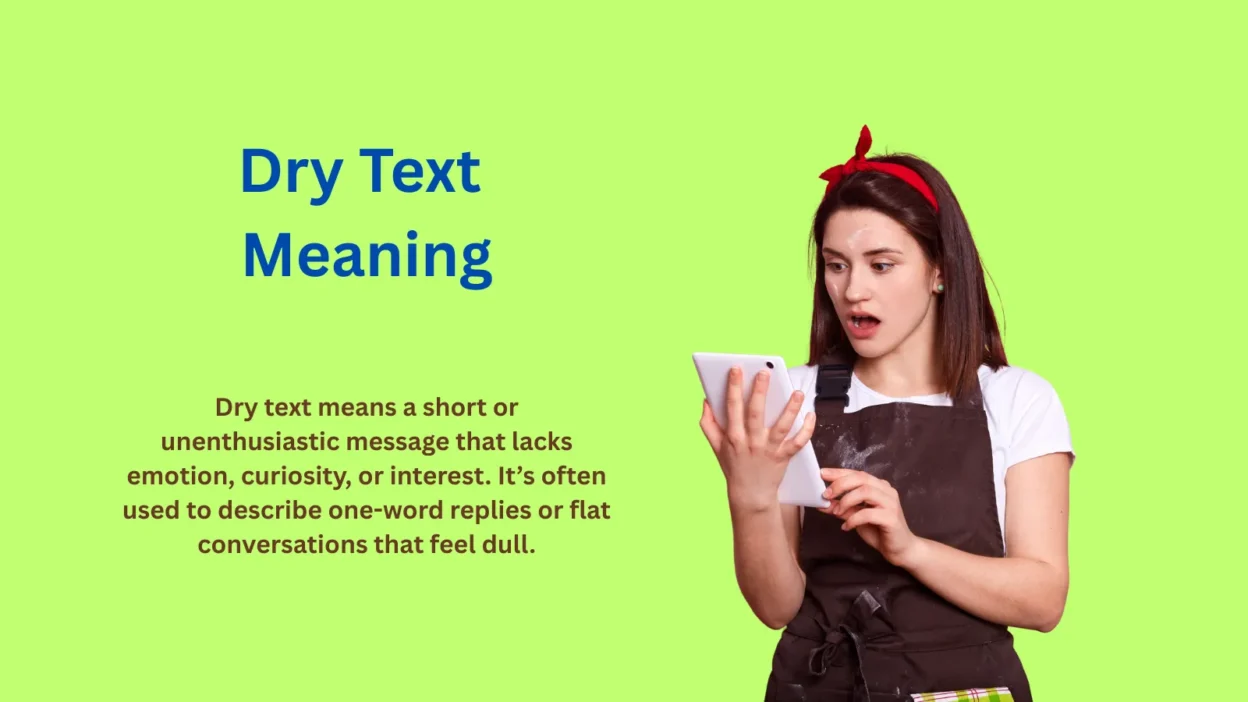
Dry text means a short or unenthusiastic message that lacks emotion, curiosity, or interest. It’s often used to describe one-word replies or flat conversations that feel dull.
These messages make it seem like the sender doesn’t care or isn’t trying to keep the chat going — even if that’s not always the case.
Example Sentences:
- “His texts are so dry — it’s like talking to a brick wall.”
- “She stopped being dry after we met in person.”
Key Points to Remember:
- Dry text = boring, emotionless, or low-effort reply.
- Usually includes one-word answers like “ok,” “fine,” or “lol.”
- Can signal disinterest — or sometimes just busyness.
- Common in dating, friendships, and casual texting.
Background & Origin
The term “dry texting” started appearing in online chats and dating forums around the early 2010s, especially as texting became the main way people communicated.
It was first used to describe someone who puts little effort into messages — a clear contrast to expressive, emoji-filled, or thoughtful replies.
As dating apps like Tinder and Bumble grew, the phrase “dry texter” became popular on TikTok, Reddit, and Twitter to describe people who don’t reciprocate energy or emotion in chats.
Today, it’s part of digital culture — shorthand for emotionally flat texting that leaves you hanging mid-conversation.
punsx.com is your new favorite place where every pun is funny enough to share with your best friends!
Usage in Various Contexts
In Texting
Dry texting is most common in casual messaging.
- “You good?”
- “Yeah.”
That’s the kind of reply that earns the “dry” label.
On Social Media
People use it to describe awkward or dull interactions.
- “Why do guys text so dry 😭?”
- “Don’t text dry if you actually like someone.”
In Dating
Being a “dry texter” can kill romantic interest fast.
- “He’s cute, but his texts are too dry to continue.”
In Friendships
Sometimes, it’s just a phase — someone’s tired, distracted, or not a big texter.
- “Sorry if I was dry — just had a long day.”
Common Misconceptions & Clarifications
- “Dry texting means they don’t like you.”
Not always! Some people are just short communicators or prefer calls. - “Dry texters are rude.”
Not necessarily — tone doesn’t always translate through text. - “Only guys text dry.”
False. Anyone can text dry depending on mood or interest level.
Example Dialogue:
- Alex: “She sent just ‘k.’ Is she mad?”
- Mia: “Maybe not. Some people just don’t text much.”
Dry texting doesn’t always mean rejection — it could mean distraction, introversion, or simply different texting styles.
Similar Terms & Alternatives
| Term | Meaning | Example |
|---|---|---|
| Ghosting | Suddenly stopping all replies | “He ghosted me after three dates.” |
| Cold texting | Messaging without warmth | “Her tone feels cold lately.” |
| Low-effort | Minimal effort in messages | “His texts are low-effort and dull.” |
| One-word reply | Replies with just one word | “She always says just ‘fine.’” |
| Dry texter | Person who sends dull messages | “He’s a dry texter, but funny in person.” |
These expressions overlap, but “dry text” focuses specifically on short, flat replies that lack engagement.
Why Do People Send Dry Texts?
There are many reasons behind dry texting — not all negative:
- Busy: They’re multitasking or distracted.
- Not interested: They’ve lost enthusiasm.
- Introverted: They prefer in-person talks.
- Unsure: They don’t know what to say next.
- Testing interest: Waiting to see if you’ll carry the chat.
Example:
- “Sorry I was dry earlier — my battery was dying.”
- “He’s not dry, just quiet by nature.”
Understanding the reason behind dry texting helps prevent miscommunication.
How to Respond to a Dry Text
Getting short replies can be frustrating, but how you respond makes all the difference.
Casual Responses
- “That’s it? 😅”
- “You sound tired — long day?”
Playful or Flirty
- “You text like my grandma 😜.”
- “Am I talking to a robot or a person?”
Direct but Polite
- “Hey, if you’re busy, we can talk later.”
- “No pressure to reply if you’re not in the mood.”
When It’s Repetitive
If they’re always dry, it might be time to move on.
Sometimes the best response is none — silence can say a lot.
Regional or Cultural Differences
- US & UK: “Dry texting” is a common dating complaint.
- Asia: Texting is often more polite and less emotional — not necessarily “dry.”
- Middle East & South Asia: Emojis and voice notes replace short texts.
- Europe: Mixed — depends on culture and personality.
Overall, “dry texting” is more about perceived tone than actual words.
Comparison with Related Phrases
| Expression | Focus | Dry Text Difference |
|---|---|---|
| Ghosting | Full silence | Dry texting = minimal, not zero. |
| Left on read | Not replying at all | Dry texting = replying without effort. |
| Breadcrumbing | Giving small attention | Dry texting = poor conversation flow. |
| Low energy | Boring communication | Dry texting = short, flat tone. |
Dry texting sits in the middle — not total disinterest, but lack of engagement.
Usage in Online Communities & Dating Apps
On TikTok, users post screenshots of “dry texts” for humor or advice.
Hashtags like #DryTexter, #TextingVibes, and #LowEffortChats trend frequently.
Example Post:
“Me pretending his dry texts don’t hurt 🥲 #DryTexterProblems”
In Dating Apps:
Profiles sometimes say things like:
- “Not a dry texter 😜”
- “Hate dry conversations — let’s vibe or not text at all.”
Dry texting has become a digital red flag — people now openly avoid it.
Curious about your nickname? Explore meganicknames.com to discover the deep meanings behind common and unique nicknames!
Hidden or Emotional Meanings
Dry texts may hint at disinterest, awkwardness, or emotional distance, but sometimes they just show different communication habits.
Example:
- “He said ‘cool.’ Is that dry or just chill?”
Tone, timing, and context matter — not just word choice.
Suitability for Professional Communication
In workplaces, “dry text” isn’t used literally, but short or unengaging messages can affect tone.
Instead of saying “dry,” professionals might say:
- “Brief”
- “Unclear”
- “Lacking context”
Example:
Instead of “That email was dry,” say “The message could use more detail.”
Being concise is good — being too dry can seem cold or unhelpful.
FAQs
- What does “dry text” mean?
A short, unenthusiastic message that lacks energy or emotion. - Is dry texting bad?
Not always — sometimes people are just busy or introverted. - Does dry texting mean they’re not interested?
It can, but not always. Look for patterns. - How can I stop being a dry texter?
Ask open-ended questions, use emojis, and add personality. - What’s the opposite of dry texting?
Engaging or expressive texting — showing interest and energy. - Can dry texting ruin relationships?
Over time, yes — if it causes confusion or emotional distance.
Conclusion
Dry text meaning goes beyond short replies — it reflects how tone and effort shape digital communication. Whether it’s a friend, a crush, or a coworker, understanding dry texting helps you read between the lines and respond wisely.
Sometimes, dry texting shows disinterest — other times, it’s just someone being themselves.