

Corporate travel is often a significant expense for small businesses, but it doesn’t have to drain your budget.
With careful planning and smart strategies, companies can reduce travel costs without compromising efficiency or employee comfort.
Whether it’s flights, accommodations, or daily expenses, small businesses can implement cost-saving measures that make corporate travel more sustainable.
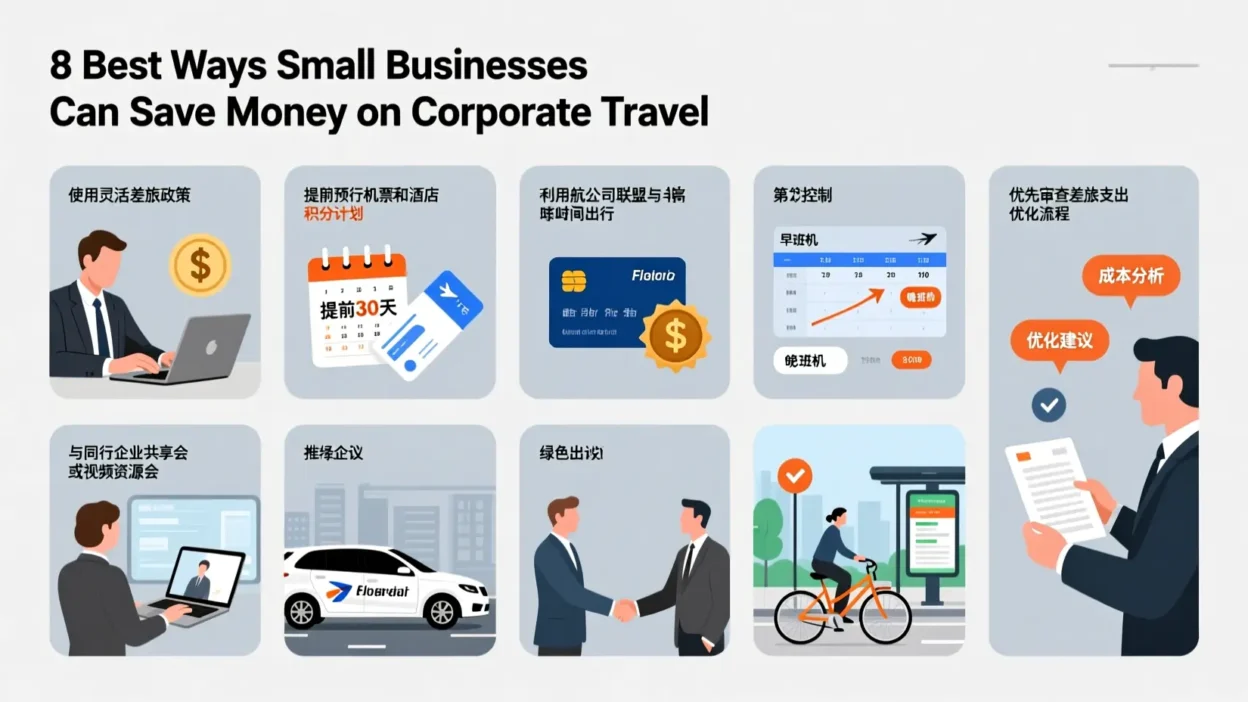
Here are 8 best ways small businesses can save money on corporate travel while maintaining productivity and employee satisfaction.
1. Plan and Book in Advance
One of the simplest ways to reduce travel costs is to plan early.
- Flights: Booking 4–6 weeks in advance can lead to significant savings on airfare.
- Hotels: Early reservations often come with lower rates and better room availability.
- Car Rentals and Transfers: Pre-booking ensures better prices and fewer surprises.
Early planning also allows companies to optimize itineraries, reducing unnecessary travel and overnight stays.
2. Use Corporate Travel Management Tools
Small businesses can leverage corporate travel management platforms to streamline bookings and monitor expenses.
Benefits include:
- Centralized booking for flights, hotels, and transportation
- Access to negotiated rates and discounts
- Expense tracking and reporting in real time
- Integration with accounting software for easier reimbursement
Tools such as Concur, TravelPerk, or TripActions provide visibility and help small businesses control spending.
3. Be Flexible With Travel Dates and Times
Flexibility can save significant money:
- Flying mid-week rather than weekends often reduces airfare.
- Red-eye or early-morning flights are usually cheaper than peak hours.
- Adjusting hotel check-in and check-out days may result in lower rates.
Encouraging flexibility among employees allows companies to take advantage of discounted travel options.
4. Optimize Accommodation Costs
Hotels can be a major travel expense. Small businesses can save by:
- Choosing business-friendly hotels with included breakfast, Wi-Fi, and transportation
- Using loyalty programs or corporate rates to reduce nightly costs
- Booking extended stays for multiple nights to access discounted rates
- Considering alternative accommodations such as serviced apartments or Airbnb for long trips
Smart accommodation choices balance comfort with cost-effectiveness.
5. Implement a Travel Policy
A clear corporate travel policy ensures employees understand cost-saving expectations.
Elements to include:
- Preferred airlines, hotels, and transportation providers
- Meal allowances and per diem limits
- Guidelines for expense reporting and approvals
- Restrictions on luxury or non-essential travel
A travel policy reduces overspending and encourages accountability across the company.
6. Utilize Technology to Reduce Travel Needs
Remote collaboration tools can help reduce the frequency of travel:
- Video conferencing platforms (Zoom, Microsoft Teams, Google Meet) replace some in-person meetings
- Shared project management tools reduce the need for travel to review documents or progress
- Cloud storage and collaboration software allow teams to work together without physical presence
By combining strategic travel with digital alternatives, small businesses save both time and money.
7. Take Advantage of Loyalty Programs and Rewards
Corporate travel rewards can lead to meaningful savings:
- Frequent flyer programs earn miles that can be redeemed for future flights
- Hotel loyalty programs provide free nights, upgrades, or perks
- Credit card points may cover travel expenses or travel insurance
Encouraging employees to participate in these programs maximizes the value of every trip.
8. Track Expenses and Analyze Travel Data
Monitoring travel spending is crucial for identifying opportunities to save.
- Use travel management tools or expense software to track flight, hotel, and meal costs
- Analyze trends to identify high-cost areas or unnecessary trips
- Adjust policies or vendors based on data to reduce future expenses
- Encourage employees to report savings tips or cost-effective options
Data-driven decisions help small businesses optimize travel budgets over time.
Bonus Tips for Extra Savings
- Group bookings: Coordinating travel for multiple employees can lower costs.
- Public transportation: Encourage employees to use buses, trains, or metro instead of taxis or car rentals.
- Travel insurance: While an upfront cost, it can prevent higher unexpected expenses from cancellations or emergencies.
- Negotiate with vendors: Building relationships with airlines, hotels, and rental companies can unlock corporate discounts.
Combining these small strategies with the main 8 tips maximizes overall savings.
Conclusion
Corporate travel doesn’t have to be a budget burden for small businesses.
By planning ahead, using technology, implementing clear policies, and leveraging loyalty programs, companies can save money on flights, accommodations, and daily expenses without sacrificing productivity or employee comfort.
Smart planning, accountability, and a willingness to embrace digital alternatives can make corporate travel both efficient and affordable, giving small businesses the freedom to focus on growth, client relationships, and business success.